


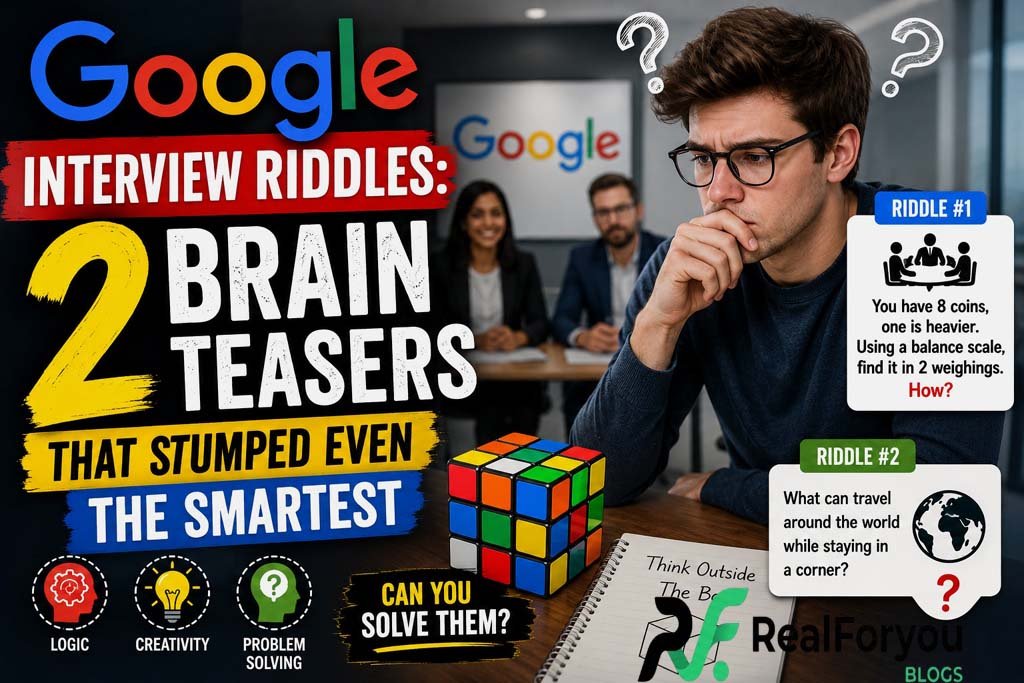
Google Used These 2 Riddles To Spot The Super Smart In Interviews. Can You Solve Them?
Introduction
Landing a job at Google has long been considered one of the most challenging career feats. With an estimated three million people applying annually and an acceptance rate of just 0.2 percent, the tech giant’s interview process is famously grueling . For years, Google was known for posing bizarre, mind-bending riddles designed to separate the truly brilliant from the merely competent .
While the company has since scaled back on these brainteasers, two particular riddles became legendary for their ability to stump even the sharpest candidates. In 2013, Google’s former head of human resources admitted these questions didn’t “predict anything” and were mostly there to “make the interviewer feel smart” . Still, they remain fascinating puzzles that test creative thinking, logic, and problem-solving under pressure.
Let’s explore these two famous riddles and see if you can solve them.
Riddle 1: The Prisoner Hat Riddle
This classic logic puzzle was reportedly used in Google interviews to test deductive reasoning .
The Setup
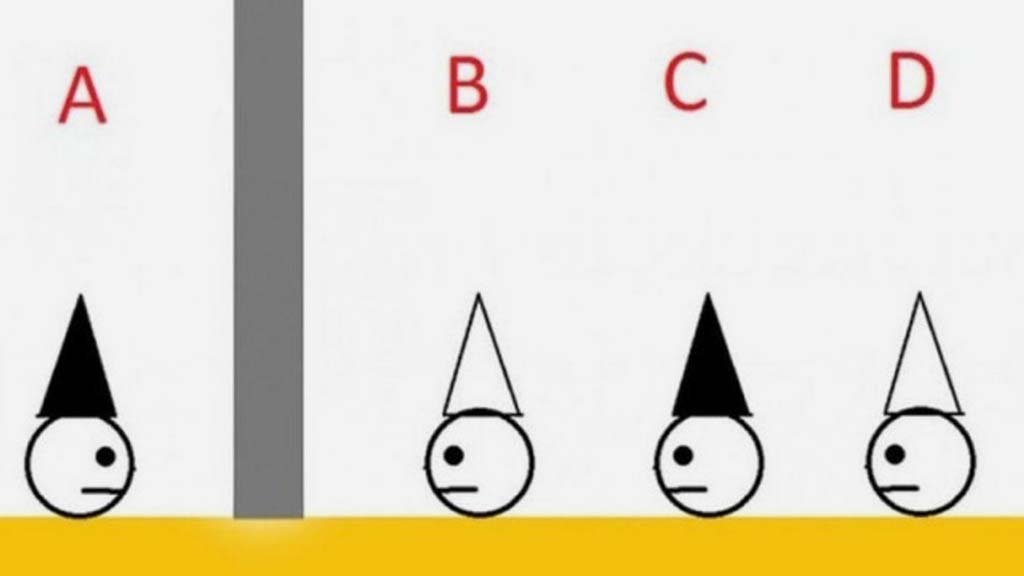
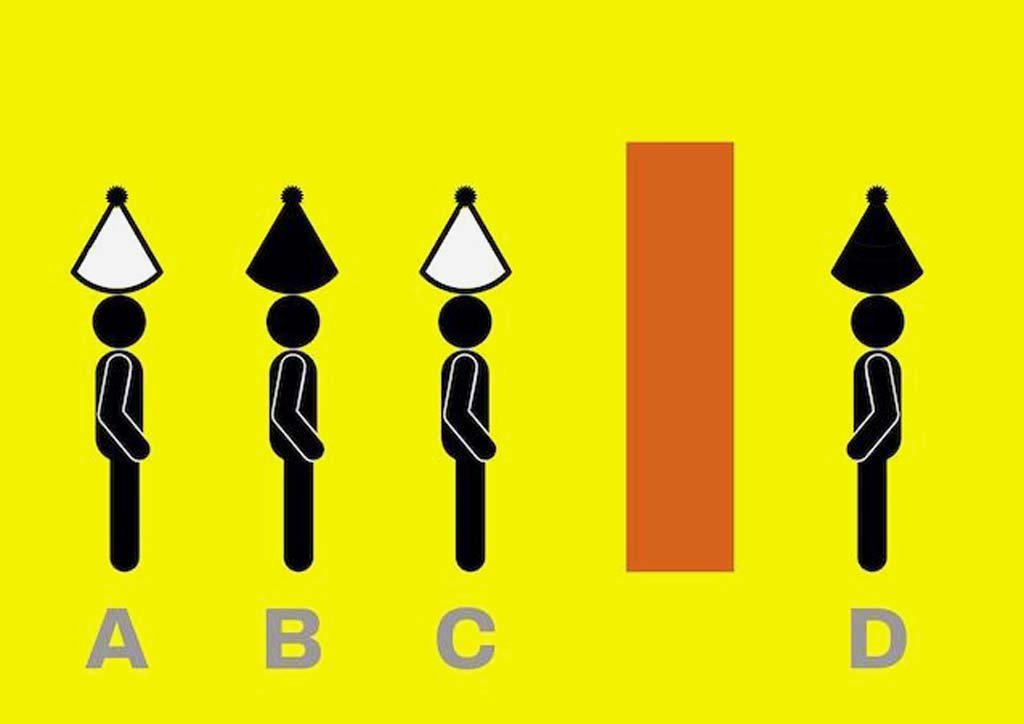
A group of four prisoners stands on a staircase, all looking toward the same side. A brick wall separates prisoner 4 from the rest .
Here is the arrangement:
Prisoner 1 is able to see both prisoner 2 and prisoner 3.
Prisoner 2 can only see prisoner 3.
Prisoner 3 can see no one (the wall is behind him).
Prisoner 4 is unable to see anyone else as the wall blocks his line of sight.
All four prisoners are wearing hats. They are told there are only two black hats and two white hats. However, no one knows the colour of their own hat. The rules are strict: they cannot turn around, move out of formation, or remove their hats .The prisoners are told to shout out the colour of their hat as soon as they figure it out.
The Question
Who is the first person to shout out correctly—and why?
The Solution
The correct answer is Prisoner 2.
Here is the reasoning: Prisoner 1 can see the hats of prisoners 2 and 3. If prisoners 2 and 3 were wearing the same colour hats, prisoner 1 would immediately know his own hat must be the opposite colour (because there are only two hats of each colour) .
However, prisoner 1 remains silent. This silence signals to prisoner 2 that prisoners 2 and 3 must be wearing different coloured hats .
Seeing prisoner 3’s hat gives prisoner 2 enough information to figure out that his own hat is the opposite shade. Therefore, prisoner 2 shouts out the correct answer first.
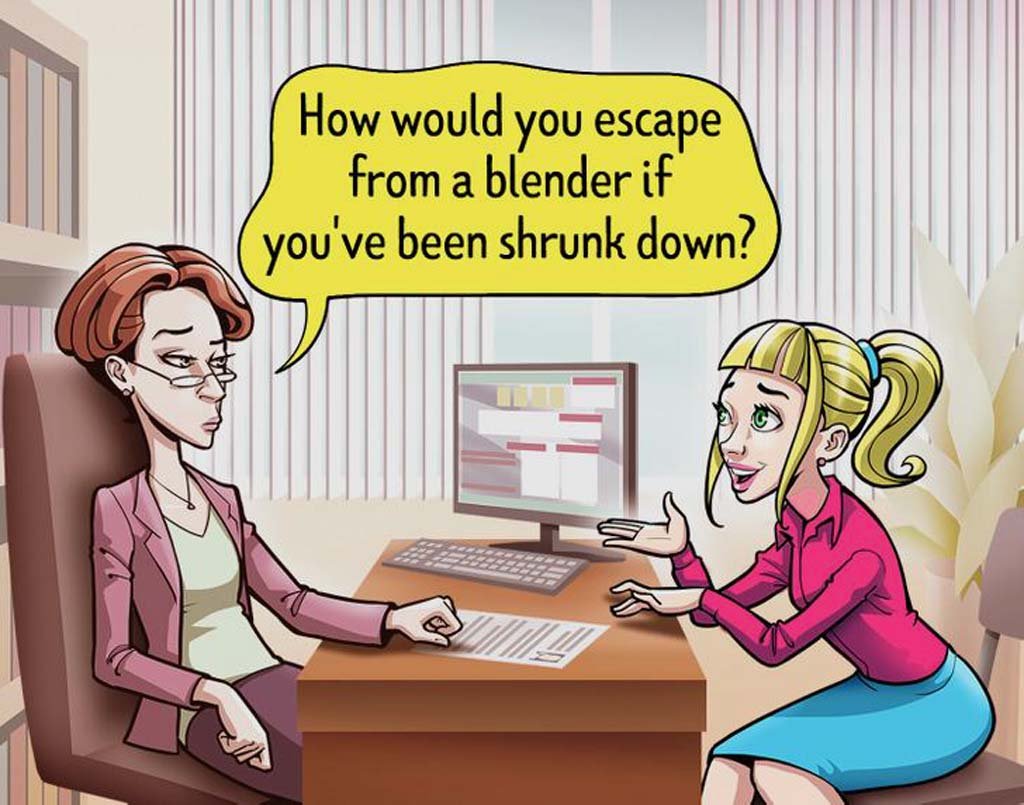
Riddle 2: The Shrunk in a Blender Riddle
The riddle gained significant popularity when it was featured in the 2013 comedy film The Internship. It tests creative problem-solving and physics intuition.
The Setup
Imagine you have been shrunk to the size of a nickel (or a coin) and dropped into a tall blender. Your mass has been reduced so that your density remains the same. The blades are set to start moving in one minute.
The Question
What do you do to escape?

The Common (But Wrong) Answer: Just Jump
The most common response is simply to jump out. The reasoning behind this is based on biomechanics: as you shrink, your strength-to-weight ratio increases dramatically . A smaller animal can jump to roughly the same absolute height as a larger one because muscle energy and mass scale proportionally .
For example, a grasshopper can jump about one metre high. If two grasshoppers hold hands, with twice the mass and twice the muscle, they can still only jump about one metre high .
The problem with this answer is that it overlooks the force-velocity relationship . To jump out of a blender, your legs would need to contract extremely fast—much faster than human muscles are capable of. Muscles generally generate less force when they contract at higher speeds. A miniaturised human would likely only be able to jump five to ten centimetres—nowhere near enough to clear the blender walls .

The Actual Solution: Use a Spring
The most effective way to escape is to use a spring mechanism . Insects like fleas and grasshoppers overcome the limits of muscle contraction by using springs. They store energy slowly and release it in an instant, producing powerful leaps .
In a blender trap scenario, a rubber band or the metal blades could be used to build a simple launching mechanism. By winding up a spring mechanism, you could build up energy over time and release it all at once, flinging yourself out of the blender .

Why Google Asked These Questions
These riddles were never really about getting the “right” answer. According to former Google software developer Gayle McDowell, the purpose was to observe how candidates approached problem-solving . Google wanted to see if candidates could:
Think logically under pressure.
Reason from first principles rather than relying on assumptions.
Communicate their thought process clearly.
Handle ambiguity and think creatively.
The company has since moved away from these “trick questions,” but they remain a fascinating window into the kind of thinking that once defined one of the world’s most competitive hiring processes .
About the Author
My name is Dua Qamar, and I am a content writer passionate about exploring the intersection of logic, creativity, and problem-solving.
Why I Wrote This Article: I wrote this piece because these two riddles represent a golden era of tech interviews—a time when companies believed that the right puzzle could unlock the secrets of a candidate’s mind. Even though Google no longer uses them, they remain a fun and challenging way to test your own thinking.
How I Approached This Topic:
I researched the most widely reported versions of these riddles, including the famous “prisoner hat” puzzle and the “shrunk in a blender” scenario. I consulted news reports and expert analyses to ensure the solutions were accurate .
Who This Article Is For:
This article is for curious readers who enjoy a mental challenge. Whether you are preparing for an interview or just love a good brainteaser, I hope you found these riddles as intriguing as I did.
The Message I Hope Readers Take Away: Creativity and logic often go hand in hand. Sometimes, the most important skill is not knowing the answer, but knowing how to think your way through the problem.
Written by: Dua Qamar
