


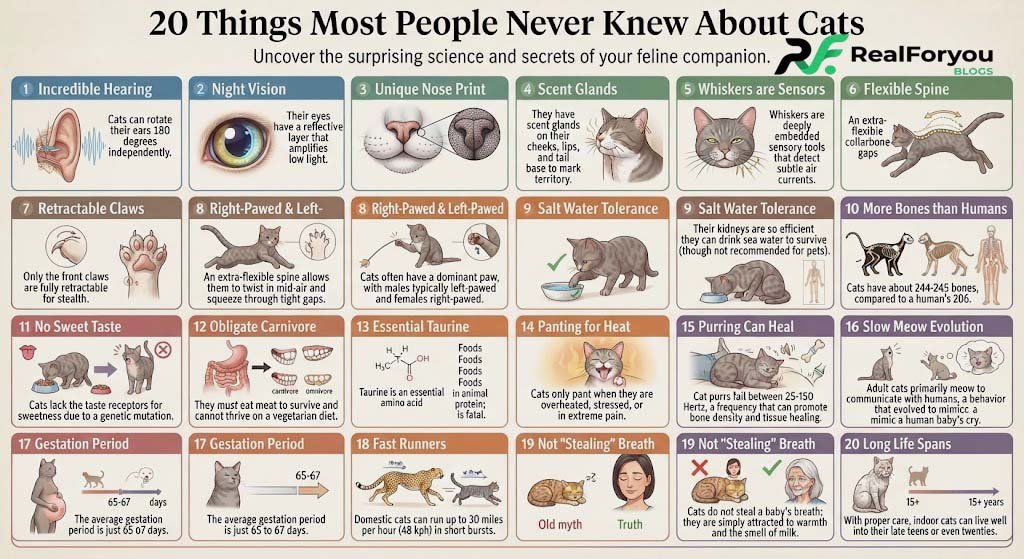
20 Things Most People Never Knew About Cats
Despite sharing our homes for millennia, cats continue to catch us off guard. From their unusual sleeping habits to the remarkable abilities hidden in their whiskers, eyes, ears, and paws, cats are far more fascinating than they may appear.
Many people think they already understand cats because these animals are common household pets. But the truth is that cats have behaviors and physical abilities that most people rarely notice. Some of their habits come from their wild ancestors, while others are adaptations that make them excellent hunters and survivors.
1. Cats Spend a Huge Part of Their Lives Sleeping
Cats are famous for sleeping, but many people do not realize just how much they rest. Depending on their age, health, and lifestyle, cats can sleep for a large portion of the day.
This behavior comes from their hunting instincts. Wild cats conserve energy between periods of activity so they can use their strength when hunting.

2. A Cat’s Whiskers Do Much More Than Look Cute
Whiskers are highly sensitive structures that help cats understand their surroundings.
They can detect changes in air movement and help a cat judge whether it can fit through a narrow space. Whiskers also provide information about nearby objects, especially in low-light environments.
That is why cutting a cat’s whiskers is not a good idea. They are important sensory tools, not ordinary hairs.
3. Cats Can Rotate Their Ears Independently
A cat’s ears are remarkably flexible. A cat’s ears swivel around to help it pinpoint where a noise is coming from.
This ability helps them identify where a noise is coming from without necessarily moving their entire head. For an animal that depends heavily on hearing while hunting, this is extremely useful.
4. Cats Use Their Tails to Communicate
You can tell a lot about how a cat is feeling just by watching its tail.
A relaxed tail may indicate comfort, while a rapidly moving or puffed-up tail can indicate excitement, fear, or agitation. A cat holding its tail upright may be showing confidence or friendliness.
However, tail movements should always be considered together with the cat’s ears, eyes, posture, and overall behavior.
5. Cats Can Make Many Different Sounds
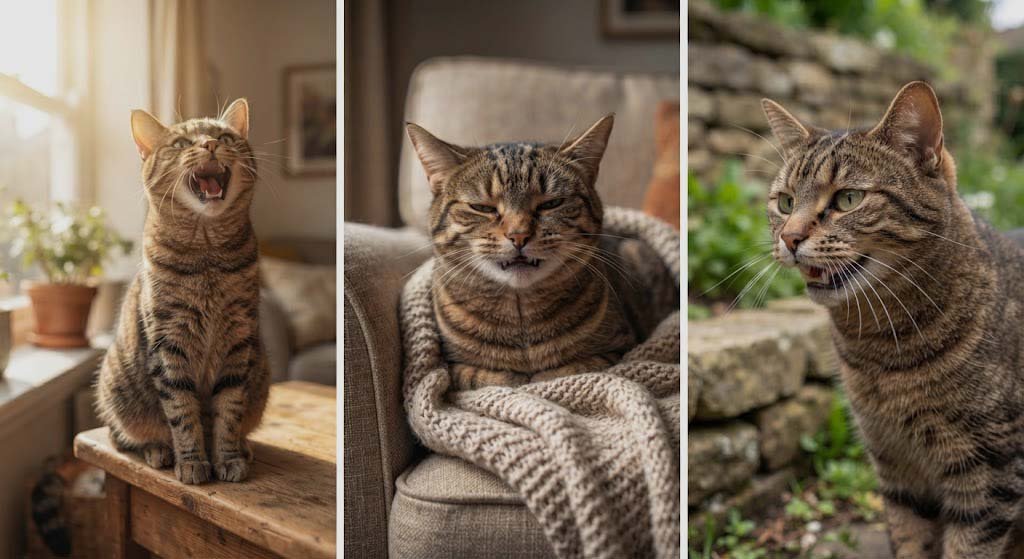
Most people associate cats with meowing, but cats have a much wider vocal range.
They can purr, hiss, chirp, trill, growl, and make other sounds. Interestingly, cats often use meowing more frequently with humans than with adult cats.
Over time, individual cats can even develop their own ways of communicating with their owners.
6. Cats possess superb hearing
Cats can hear sounds at frequencies that humans cannot detect. Their sensitive hearing helps them locate small animals and respond quickly to noises around them.
This explains why your cat may suddenly stare at an apparently empty wall or turn its head toward something you cannot hear.
7. Their Eyes Are Built for Low-Light Conditions
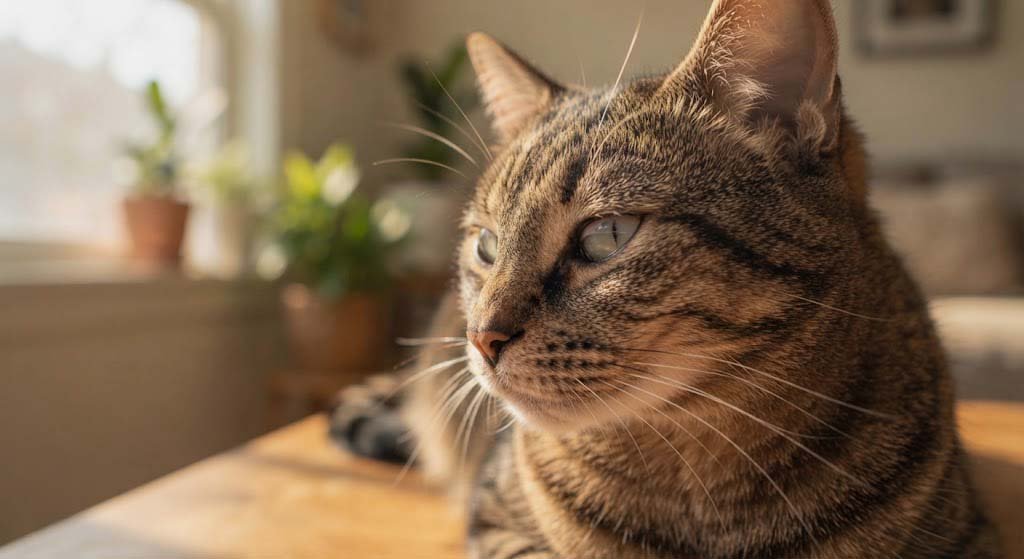
Cats are particularly good at seeing in dim light. Their eyes contain structures that help them make better use of available light.
However, the common belief that cats can see perfectly in complete darkness is incorrect. Even so, they require a certain amount of light to see.
8. Cats Have a Third Eyelid
Cats have an additional membrane known as the third eyelid, or nictitating membrane.
It helps protect the eye and can contribute to keeping its surface moist. You normally may not notice it because it remains mostly hidden when the cat is healthy and alert.
9. Cats Walk Almost Silently
A cat’s paws are designed for quiet movement. Their soft paw pads help reduce noise when they walk.
This ability is extremely useful for stalking prey. It also explains why a cat can sometimes appear beside you without making a sound.
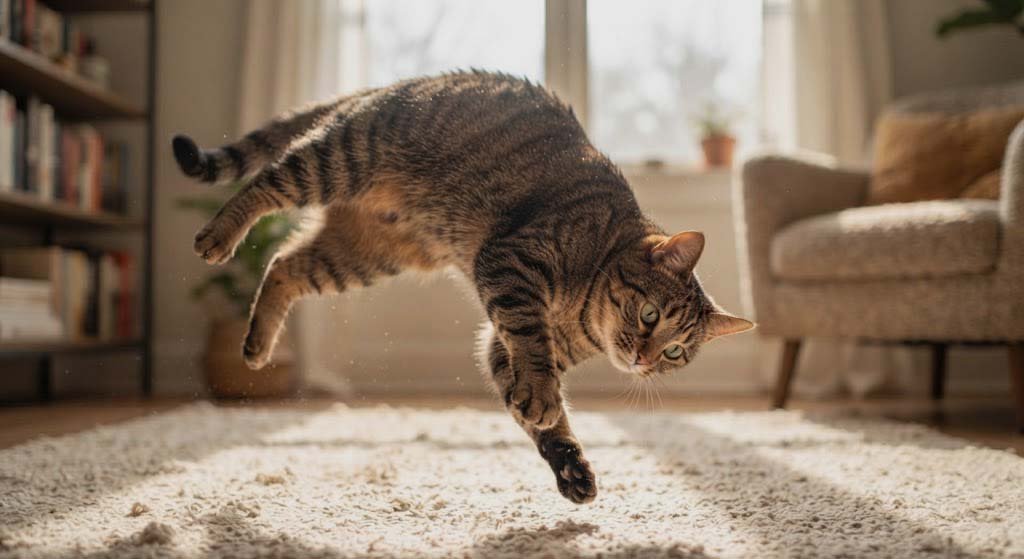
10. Cats Can Jump Surprisingly High
A healthy cat can jump several times its own body height. Powerful muscles in the back legs provide the force needed for these impressive leaps.
This ability comes from their natural climbing and hunting instincts.
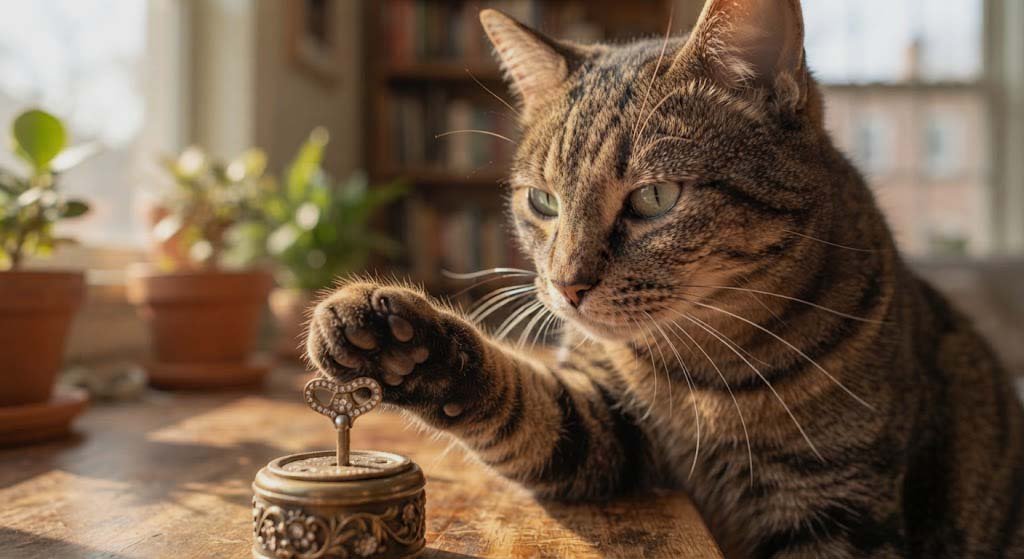
11. Cats Use Their Paws Like Sensitive Tools
A cat’s paws are not simply used for walking. They contain sensitive nerve endings that help cats explore surfaces and objects.
This is one reason cats may carefully touch something with a paw before approaching it.
12. Cats Have a Strong Sense of Smell
Although cats are famous for their eyesight and hearing, their sense of smell is also extremely important.
They use scent to investigate unfamiliar environments, identify other animals, and understand changes around them.

13. Cats Leave Their Scent in More Ways Than You Think
When a cat rubs its face against furniture, objects, or even you, it may be leaving scent information from glands around.
14. Cats Have a Powerful Righting Reflex
Cats have an impressive ability to orient their bodies during a fall. Their flexible spine and body structure help them adjust their position in midair.
This is often called the righting reflex. However, it does not mean cats are immune to injuries from falling. Falls from significant heights can still be dangerous.
15. Cats Are Natural Groomers
Cats spend considerable time grooming themselves. Grooming helps keep their coats clean and can also play a role in regulating body temperature and maintaining skin health.
It is also part of normal feline behavior and can provide a calming routine.
16. Purring Does Not Always Mean Happiness
Many people assume that a purring cat is always happy.
Purring commonly occurs when cats are comfortable, but cats may also purr when they are frightened, stressed, or uncomfortable. Therefore, purring should be interpreted alongside other signs of behavior.
17. Cats May Remember More Than You Expect
Cats can learn routines and associate particular sounds, people, places, and experiences with positive or negative outcomes.
Your cat may recognize the sound of a food container, remember a familiar routine, or anticipate what happens after you pick up its favorite toy.
18. Cats Have Individual Personalities
Not every cat behaves the same way. Some are outgoing and affectionate, while others prefer distance and independence.
Personality can be influenced by genetics, early experiences, socialization, environment, and individual temperament.
19. Cats Can Become Attached to Their Humans
Cats are sometimes described as completely independent animals that do not form strong relationships with people.
That is not always true. Many cats develop meaningful social bonds with their owners and may seek them out for comfort, play, food, or companionship.
A cat’s way of showing affection may simply be different from that of a dog or human.
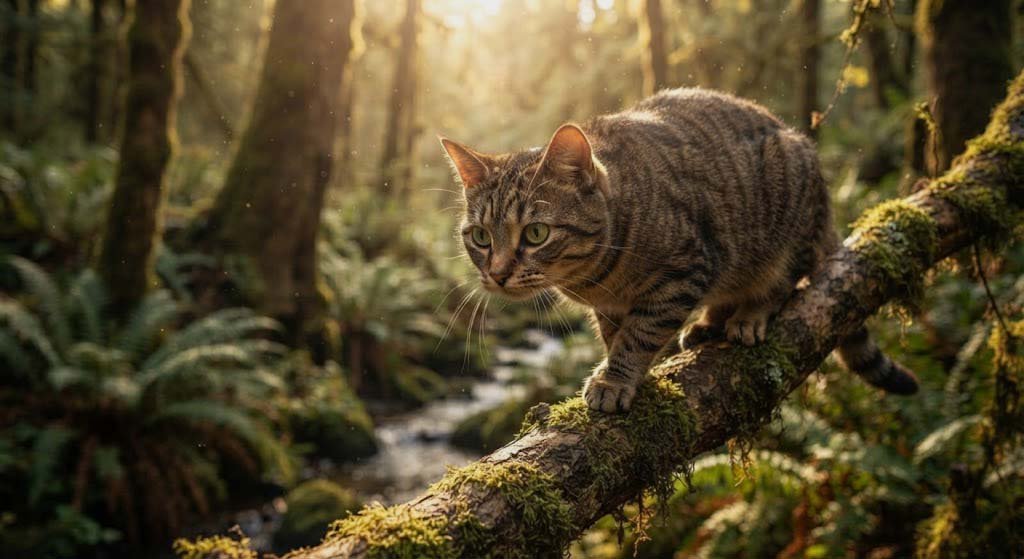
20. Cats Are Still Closely Connected to Their Wild Instincts
Perhaps one of the most interesting things most people never knew about cats is how much of their behavior reflects their wild ancestry.
Stalking toys, hiding in small spaces, climbing high places, scratching surfaces, watching birds, and suddenly running around the house can all be connected to natural feline instincts.
Your house cat may live comfortably indoors, but part of its ancient hunter is still there.
Final Thoughts
The more we learn about cats, the more fascinating they become. Their bodies are designed for hunting, their senses are highly developed, and their behaviors often communicate more than we realize.
About Author
I, Dua Qamar, wrote this article because I believe understanding cats can help people become more patient and responsible pet owners. Instead of seeing a cat’s unusual behavior as strange or annoying, we can ask what instinct, emotion, or need may be behind it.
These things most people never knew about cats show that cats are not simply quiet pets that sleep all day. They are intelligent, sensitive, adaptable animals with complex ways of experiencing and communicating with the world.
The next time your cat stares at something you cannot see, moves its whiskers, slowly blinks at you, or suddenly races across the room, remember that there may be much more happening than meets the eye.d its face.
This behavior can be connected to communication and familiarity. When your cat rubs against you, it can also be a social and affectionate behavior.
Written by Dua Qamar
