


When Your Cat Spends More Time With Her Kittens: Why You May Feel Ignored
When your cat has babies, her world suddenly changes. You may notice that the cat who once followed you around the house, slept beside you, or asked for attention now spends most of her time with her kittens. She may stay in the nesting area, nurse them, groom them, and become less interested in playing or cuddling with you.
It can leave an owner wondering, “Why does my cat ignore me after having kittens?”
The good news is that this behavior is usually not personal. A mother cat naturally becomes highly focused on protecting, feeding, cleaning, and caring for her babies. Her attention has shifted because her kittens currently depend on her for almost everything.
In this article, I, Dua Qamar, explore why your cat spends so much time with her kittens, why she may seem to ignore you, and how you can continue supporting her without making her feel stressed.
1. Her Kittens Need Her Constantly
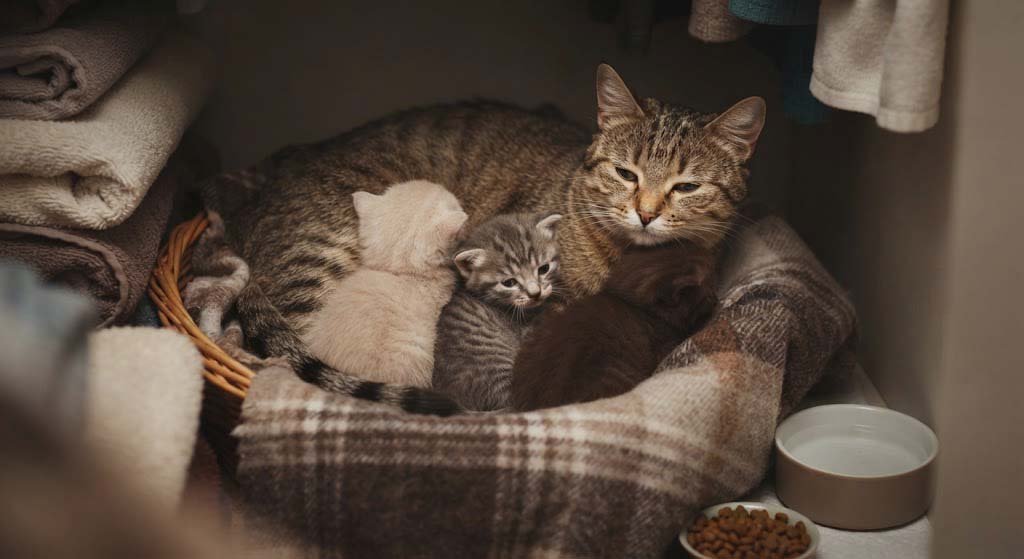
Newborn kittens are extremely dependent on their mother.
They cannot properly care for themselves, and during their early days they rely heavily on their mother for warmth, feeding, grooming, and protection.
This is the biggest reason your cat spends more time with her kittens than with you.
Her attention is not disappearing. It is being directed toward babies that need her almost constantly.
2. She Is Protecting Her Babies
A mother cat can become especially alert after giving birth.
She may choose a quiet nesting area and become cautious about people or other animals approaching her kittens. This behavior is connected to her natural maternal instincts.
Even a cat that normally loves attention may become more protective during this period.
If she seems uncomfortable when you approach the kittens, give her some space instead of forcing interaction.
3. Nursing Takes a Lot of Energy
Producing milk requires significant energy.
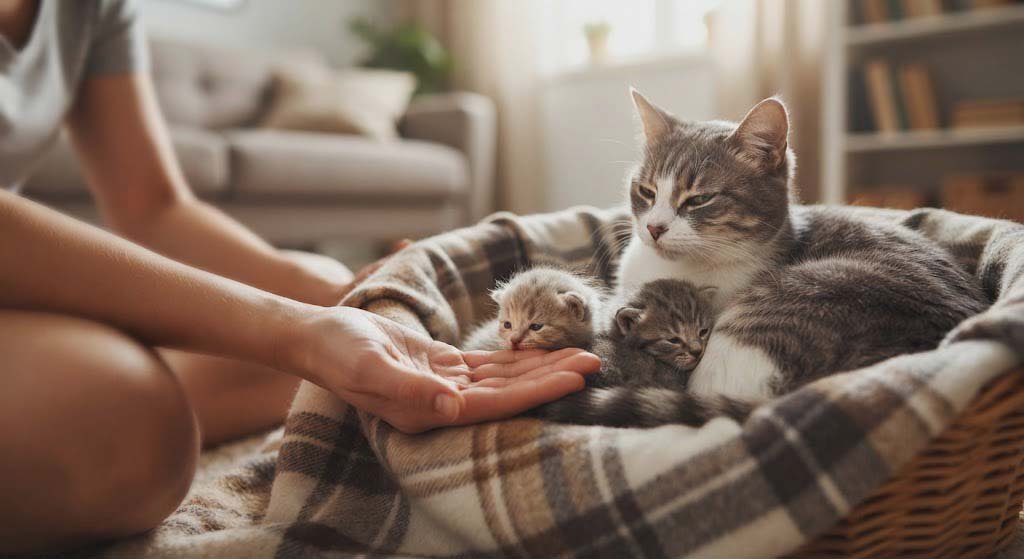
A mother cat may spend a large part of her day nursing her kittens. She also needs enough food and water to support herself and milk production.
Because caring for kittens is physically demanding, she may have less energy for playing or interacting with you.
This is usually temporary.
4. Grooming Her Kittens Is Part of Motherhood
Mother cats regularly groom their kittens.
This helps keep the kittens clean and is an important part of maternal care. The mother may spend a surprising amount of time licking and caring for each baby.
From an owner’s perspective, it can look like the mother has completely forgotten about everything else.
In reality, she is simply doing an important job.
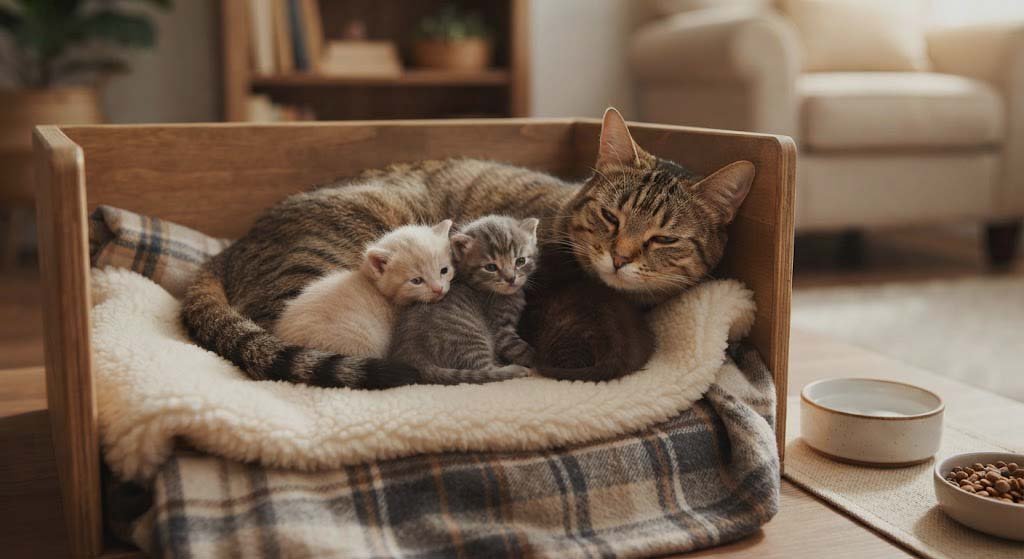
5. She Wants to Keep the Nest Safe
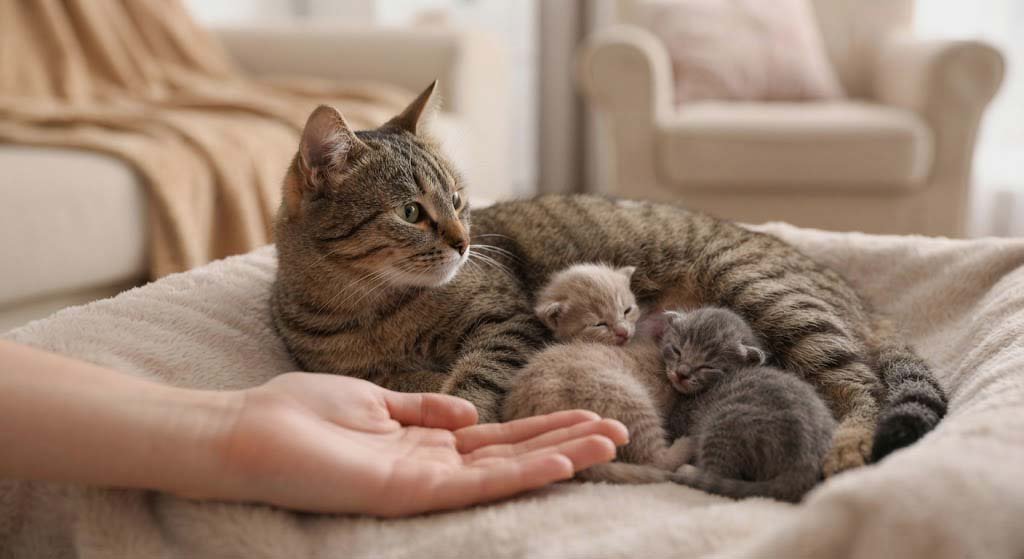
Cats are naturally attracted to quiet, secure places when raising young.
Your cat may spend most of her time in a box, closet, quiet room, or another protected location with her kittens.
This does not mean she no longer likes you. She may simply feel that the nesting area is the safest place for her babies.
6. Her Personality May Temporarily Change
Hormonal changes surrounding pregnancy and motherhood can influence feline behavior.
A previously affectionate cat may become more independent, cautious, protective, or focused on her kittens.
These changes do not necessarily represent a permanent change in her relationship with you.
As the kittens become more independent, her behavior may gradually return closer to what you were accustomed to.
7. Don’t Compete With the Kittens
It is understandable to feel ignored when your cat spends nearly all her time with her babies.
But trying to compete for her attention can create unnecessary stress.
Instead of demanding cuddles, allow her to choose when she wants interaction.
Sit nearby, speak softly, and let her approach you when she feels comfortable.
Sometimes giving a cat space is the best way to maintain trust.
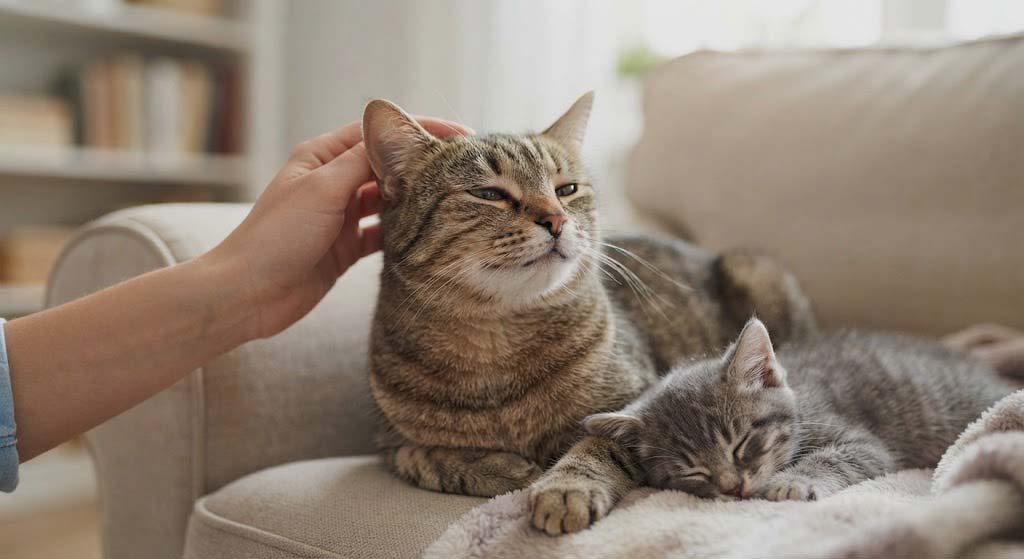
8. Continue Showing Her Gentle Affection
Even though your cat spends more time with her kittens, you can still show her that you are there.
Offer gentle affection when she welcomes it. You can speak calmly, provide food and fresh water, and spend quiet time nearby.
You do not need to constantly touch her or handle the kittens.
Your calmness can help her feel safe.
9. Give Her a Comfortable Environment
A mother cat needs a safe and comfortable place for herself and her kittens.
Try to keep the nesting area:
Quiet
Warm
Clean
Away from heavy household traffic
Protected from other pets
Easy for the mother to access
Avoid repeatedly moving the kittens unless necessary.
A stable environment can help reduce stress during this important period.
10. Make Sure She Has Food and Water Nearby
A nursing mother needs access to fresh water and appropriate nutrition.
Because she may not want to leave her kittens for long periods, placing food and water reasonably close to the nesting area can make things easier for her.
Do not assume that reduced interaction means reduced needs. She still requires proper care and attention from you.
11. She May Still Love You
This is perhaps the most important point.
If your cat seems to ignore you after having kittens, it does not automatically mean that she has stopped loving you.
Her relationship with you has not necessarily disappeared. Her priorities have simply changed temporarily.
A mother cat can be deeply attached to her owner while being completely focused on her babies.
Think of it as a new chapter rather than the end of your relationship.
12. Her Attention May Return Gradually
As kittens grow, they become increasingly independent.
They eventually begin exploring, playing, eating other foods, and spending less time nursing. As their dependence on their mother decreases, she may have more freedom to rest and interact with you.
You may gradually notice your cat returning to old habits.
She may once again sit beside you, follow you around, ask for attention, or enjoy longer periods of interaction.
When You Should Be Concerned
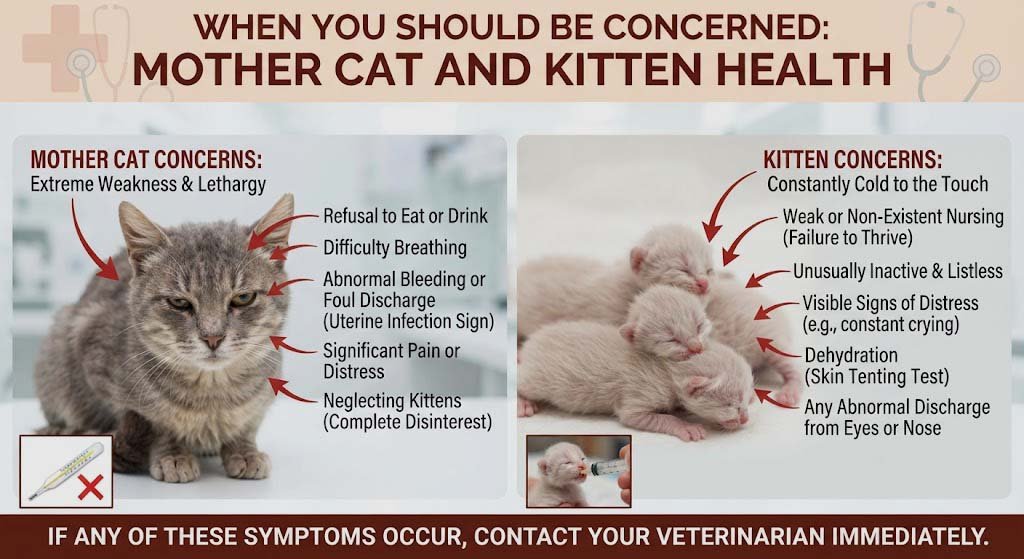
While maternal behavior is normal, significant changes in a mother cat’s health should not be ignored.
Contact a veterinarian if she appears extremely weak, refuses food or water, seems to have difficulty breathing, has unusual discharge or bleeding, appears to be in significant pain, neglects her kittens completely, or shows other concerning symptoms.
Likewise, newborn kittens that appear consistently cold, weak, unable to nurse, or unusually inactive may require professional attention.
Final Thoughts
When your cat spends more time with her kittens, it is easy to feel forgotten. You may miss the days when she followed you everywhere or curled up beside you whenever you sat down.
But try to see the situation from her perspective.
She has suddenly become responsible for tiny lives that depend almost completely on her. Feeding, warming, grooming, protecting, and comforting her kittens naturally take priority.
About Author
I, Dua Qamar, wrote this article because I believe understanding a mother’s behavior can help cat owners become more patient and supportive during this special stage.
Your cat has not necessarily stopped caring about you.
She is simply caring for someone who needs her right now.
Give her time, provide a safe environment, respect her boundaries, and continue offering gentle support. As her kittens grow more independent, there is a good chance your old companion will have more time for you again.
Who This Article Is For
This article is for cat owners whose female cat has recently given birth. It is also for anyone who has noticed a change in their cat’s personality after she became a mother.
If your cat used to be affectionate but now prefers staying with her kittens, understanding normal maternal behavior can help you avoid taking the change personally.
Why I Wrote This Article
I, Dua Qamar, wanted to write about this experience because pet owners can sometimes feel confused or even hurt when their cat suddenly becomes less attentive after giving birth.
It is natural to miss the attention you once received from your pet. However, motherhood can temporarily change a cat’s priorities. I believe understanding the reason behind this behavior can help owners respond with patience rather than frustration.
Written by Dua Qamar

1 Comment
Pingback: Understand Your Cat Better? 15 Shocking Things She Wants Yo