


16 Weirdest And Gross Things Found Under Water
Introduction
The ocean covers more than 70 percent of our planet’s surface, yet humans have visually explored only about 0.001 percent of the deep seafloor . What lies beneath is a realm of mystery, strange creatures, and sometimes downright disturbing discoveries. From deadly underwater pools to bizarre creatures that look like something from a nightmare, the deep sea continues to amaze and terrify us in equal measure.
Here are sixteen of the weirdest and grossest things ever found underwater.
1. The “Hot Tub of Despair”
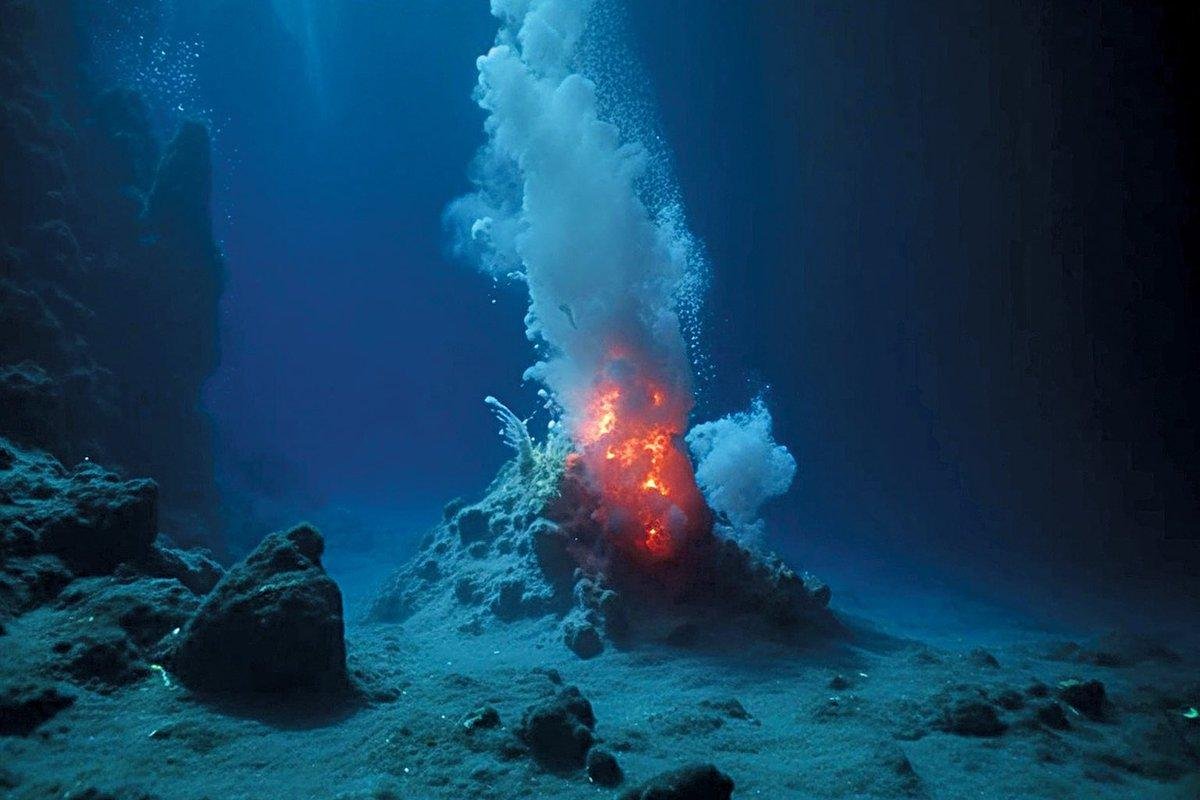
Deep beneath the Gulf of Mexico, hidden more than 3,000 feet below the surface, lies a 100-foot-wide pool so deadly that anything entering it dies instantly .Often called the “Hot Tub of Despair,” this underwater lake contains a deadly combination of hydrogen sulfide, methane, and extremely salty water with a salinity nearly four times greater than that of the surrounding sea.
The brine is so dense that it sits on the ocean floor like a lake, refusing to mix with the surrounding seawater . The banks are littered with preserved corpses of creatures that dared to swim into its warm, deadly waters . Scientists discovered it in 2015 using a remote-operated vehicle, and one researcher described it as “one of the most amazing things in the deep sea” .
2. The Carnivorous “Death-Ball” Sponge
Deep-sea explorers near Antarctica discovered a creature so unusual it was dubbed the “death-ball” sponge . Found 2.2 miles beneath the surface, this carnivorous sponge doesn’t passively filter-feed like most sponges—it actively hunts .
Using small hooks, it captures prey that brushes against it, absorbing them slowly over time. One researcher explained that any creature coming into contact with the lake would have little chance of survival, adding that being slowly consumed over time would be a particularly horrific fate. The creature’s strange appendages end in orb-like structures, giving it a bizarre appearance that casts “an incredible shadow” .
3. The Pigbutt Worm
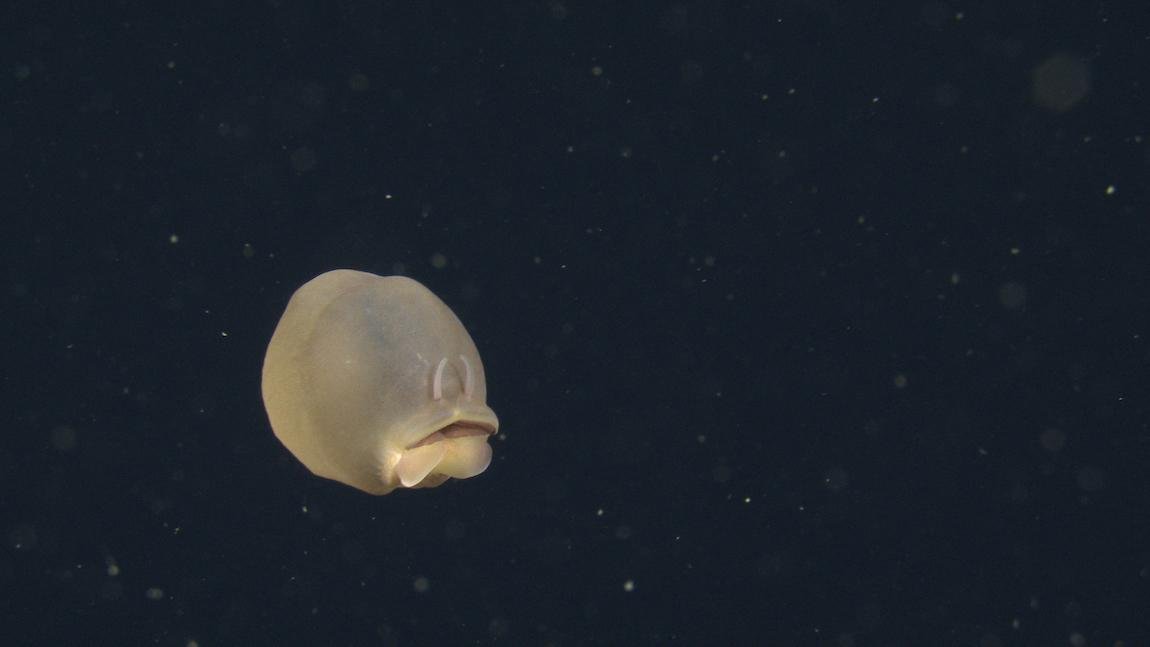
In 2001, scientists from the Monterey Bay Aquarium Research Institute encountered a translucent pink blob floating in the ocean’s Midnight Zone, between 2,700 and 7,200 feet deep . The creature, about the size of a hazelnut, looked so much like a pig’s posterior that they named it Chaetopterus pugaporcinus—literally “pig butt worm” in Latin .
These tiny, glowing creatures use their bioluminescence to flash blue light when poked, likely as a defense mechanism against predators . Scientists still aren’t sure if they’re adults or larvae, making them one of the ocean’s enduring mysteries .
4. A Massive Whale Graveyard
In 2023, Chinese scientists discovered the world’s largest whale graveyard in the Indian Ocean, stretching 1,200 kilometers along the seafloor . The site contains nearly 500 whale skeletons, some dating back 5.3 million years .
The graveyard sits up to 7,000 meters deep and supports entire ecosystems of jellyfish, worms, snails, and crustaceans feeding off the carcasses . One lead researcher said they were “astonished” by the discovery, noting it was “far beyond anything we had imagined” .
5. The Golden Orb Mystery
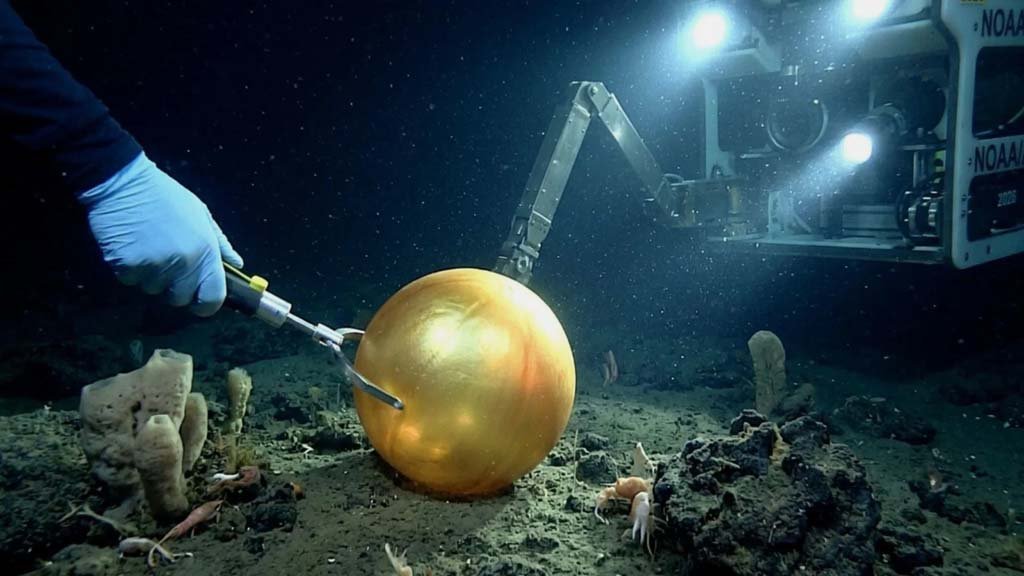
In 2023, an NOAA Ocean Exploration expedition found a mysterious golden orb at the bottom of the ocean off Alaska’s coast, about two miles deep . The 10-centimeter-wide object was “tightly adhered” to a rock and had a hole in one side .
Scientists initially guessed it could be an egg casing, a dead sponge, or coral . One researcher jokingly remarked that they only hoped nothing would emerge after they disturbed the mysterious site. It’s like the beginning of a horror movie” . It was later identified as biological in origin, though its exact nature remains unknown .
6. Panda Skeleton Sea Squirts
Divers exploring coral reefs around Japan’s Ryukyu archipelago discovered tiny creatures that looked like panda skeletons—complete with white heads, black eye patches, and what appeared to be a tail . These 2-centimeter-long animals are actually a new species of sea squirt called Clavelina ossipandae .
The “ribs” visible through their transparent bodies are actually blood vessels, and the black “eye” markings serve an unknown purpose . They’re filter feeders that start life as tadpole-like larvae before settling onto the seabed .
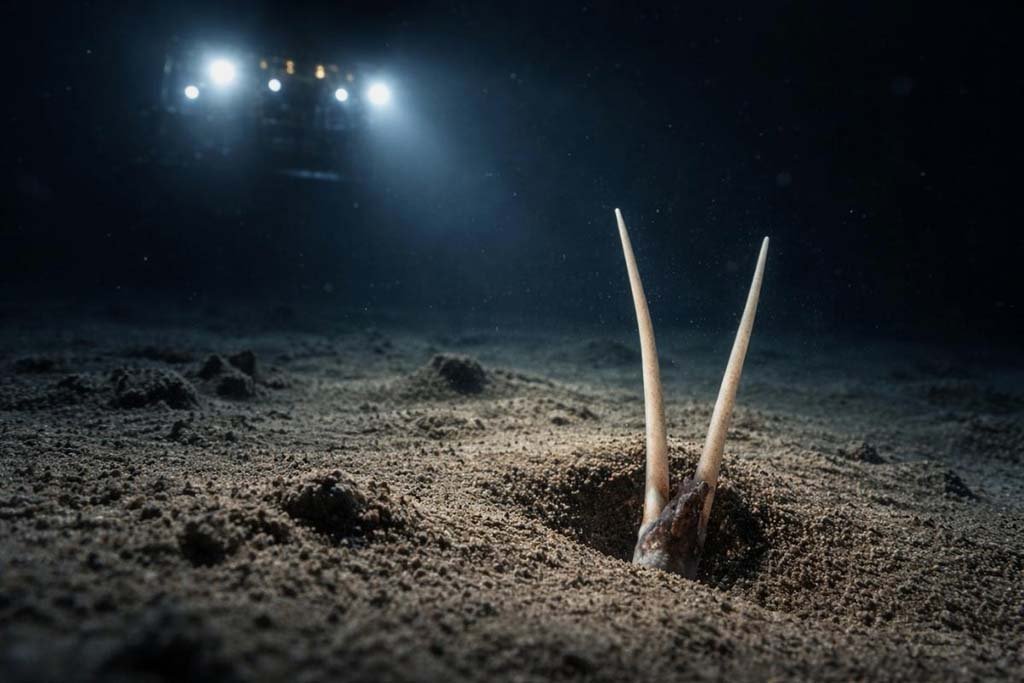
7. The Muddy Squid
In the Pacific Ocean, 4,000 meters below the surface, researchers recorded a squid burying its head in the sediment with its tentacles exposed . Nicknamed the “muddy squid,” this is the first time any squid has been observed in an upside-down, rigid position .
Scientists believe it may have been concealing itself from predators or using its exposed tentacles to catch prey . This behavior suggests that deep-sea biodiversity may be much higher than current estimates .
8. Goblin Shark
Known as a “living fossil,” the goblin shark has never been filmed alive in its natural environment until recently . Researchers captured footage of this rare creature in the Pacific Ocean, nearly 700 meters deeper than previously known .
Its long snout contains special sensors for finding prey in complete darkness, and its jaw shoots forward at super-fast speed to catch victims . Its bizarre appearance has earned it a reputation as one of the ocean’s strangest predators .
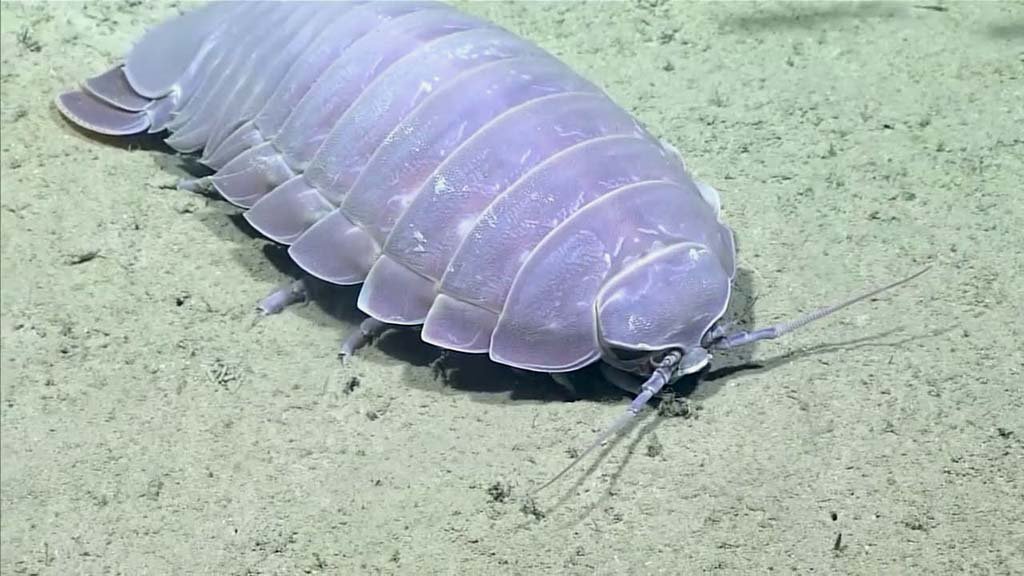
9. The Darth Vader Sea Bug
A massive deep-sea creature discovered in Vietnam grows more than 30 centimeters long and has a head that looks just like Darth Vader’s helmet—earning it the name Bathynomus vaderi . This giant isopod is thought to live around 1,000 meters underwater, where it’s extremely dark .
Experts discovered it in a Vietnamese market, where they picked up four specimens and realized they had found a new species .
10. The Antikythera Mechanism
In 1901, divers discovered a rusted device among a shipwreck off the Greek island Antikythera . The device, now known as the Antikythera Mechanism, is considered the oldest known computer, possibly invented between 200 and 70 BC . The device was used to determine the movements of astronomical objects and predict eclipses.
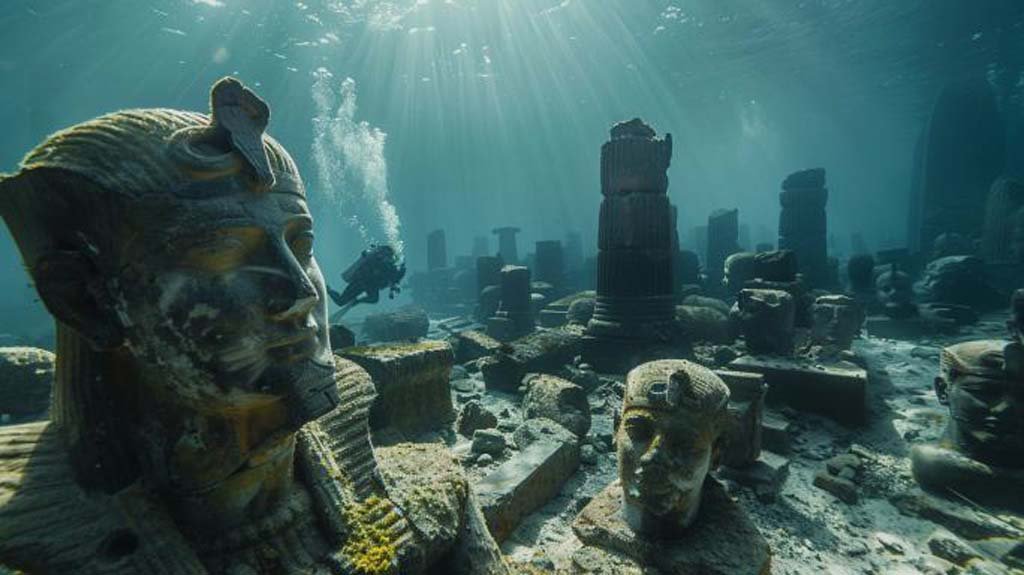
11. Lost Cities and Sunken Civilizations
The remains of at least a dozen lost cities rest at the bottom of the ocean . Cleopatra’s sunken palace in Alexandria, Egypt, was cast into the sea by an earthquake and tsunami over 1,400 years ago . The spectacular Lion City of Shicheng lies at the bottom of China’s Qiandao Lake, flooded in 1959 to make room for a hydroelectric dam .
12. The Baltic Sea UFO
In 2014, Swedish divers discovered a disc-shaped object on the floor of the Baltic Sea that looked like a UFO . While UFO enthusiasts embraced the find, scientists believe it’s more likely a rock of unknown origin or possibly a meteor .
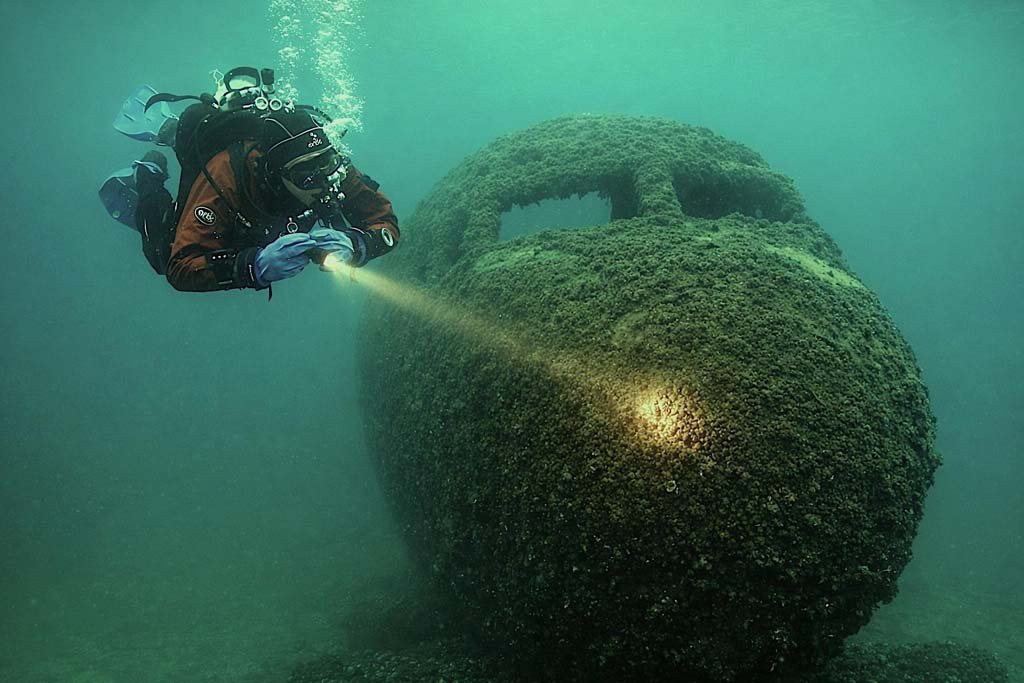
13. A Locomotive Graveyard
In 1985, two rare trains from 1850 were discovered under 90 feet of water off the coast of New Jersey . There’s no record of them being lost or even built, but they likely fell victim to a storm while being transported across the Atlantic . The steam engines remain eerily preserved under a thick layer of rust .
14. Unexplained Skeletons in India
At the bottom of Roopkund Lake in the Himalayas, hundreds of ancient skeletons believed to be about 1,200 years old were discovered in 1942 . Their origins remain unknown, and their remote location makes them one of the world’s strangest underwater graveyards .
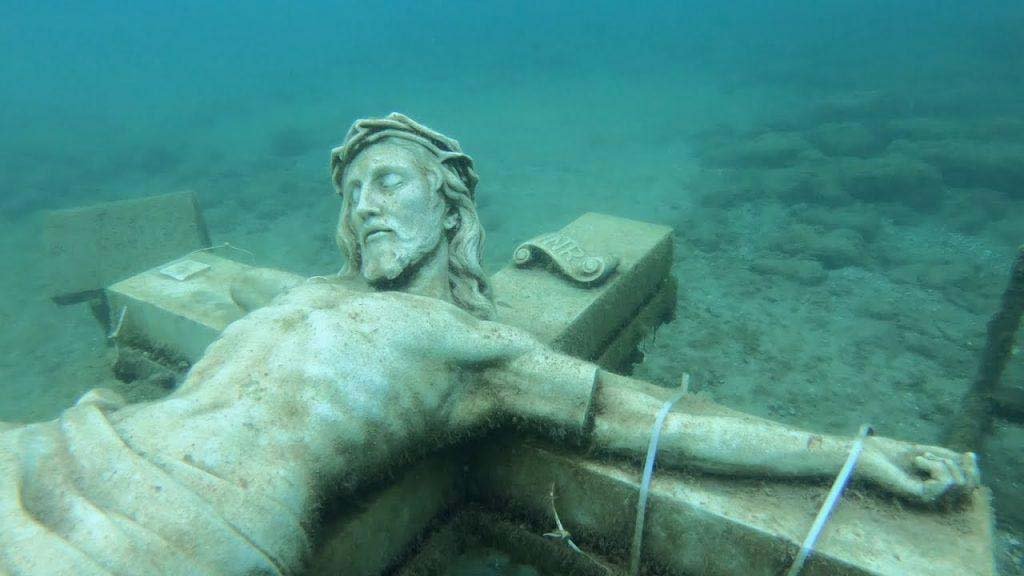
15. A Giant Crucifix in Lake Michigan
At the bottom of Lake Michigan lies a 1,800-pound Italian marble sculpture of Jesus crucified on the cross . Submerged in 1962, it was declared a memorial for deceased divers and is visible from boats above .
16. Brine Pools That Create Life from Death
Deep-sea brine pools form seas within the sea. They’re so salty that they don’t mix with the ocean above, creating a visible underwater lake . While their centers are deadly, their edges support vibrant ecosystems—shrimp, eels, and sharks patrol the edges, scavenging stunned prey that die in the toxic brine .
Conclusion
The ocean’s depths hold wonders and horrors beyond imagination. From pools of instant death to creatures that look like panda skeletons, these discoveries remind us how little we truly know about our planet. Each expedition reveals something new—and often profoundly strange. As one scientist put it: “Isn’t the deep sea so delightfully strange?”
About the Author
My name is Dua Qamar, and I am a content writer fascinated by the ocean’s mysteries and the bizarre creatures that inhabit it.
Why I Wrote This Article:
I wrote this piece because the deep sea is one of the least explored frontiers on our planet. Every year, scientists make discoveries that challenge our understanding of life itself. I wanted to share some of the most bizarre and unsettling finds with curious readers who love the strange and unexplained.
How I Approached This Topic:
My research involved exploring scientific reports, news articles, and academic publications covering deep-sea discoveries. I focused on well-documented findings from reputable sources to ensure accuracy.
Who This Article Is For:
This article is for anyone fascinated by the ocean’s mysteries—from casual readers to marine life enthusiasts.
The Message I Hope Readers Take Away:
The deep sea remains one of Earth’s last frontiers. Its strange inhabitants and phenomena remind us how much we still have to learn about our own planet.
Written by: Dua Qamar
