


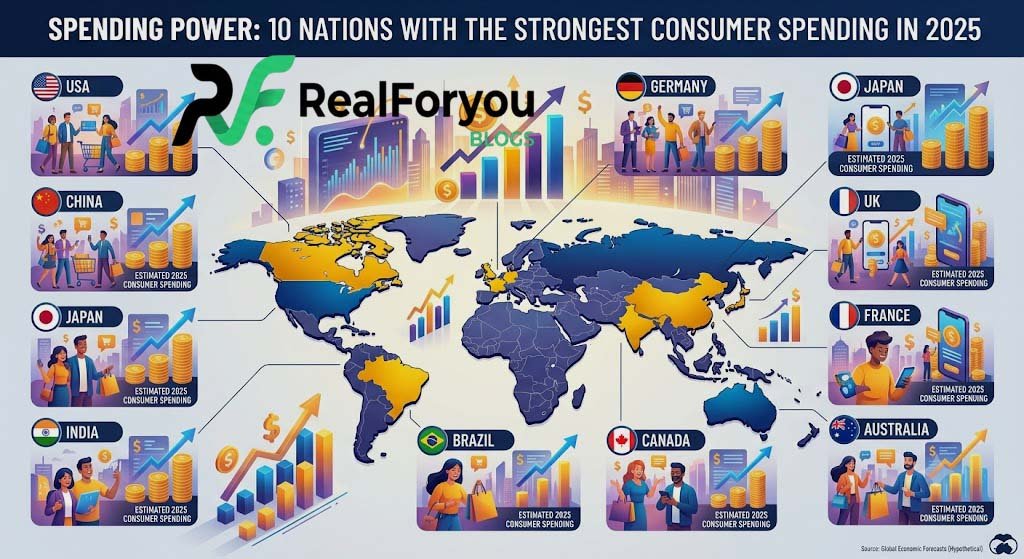
10 Nations With the Strongest Consumer Spending Power
Introduction
When we think of wealthy nations, we often picture massive economies like the United States or China. But the real measure of a country’s prosperity isn’t just the size of its economy—it’s how much purchasing power the average person actually has in their hands. That’s where GDP per capita based on Purchasing Power Parity (PPP) comes in. This metric adjusts for differences in price levels and cost of living across countries, giving a much clearer picture of what people can actually afford to buy with their money .
The results might surprise you. Some of the wealthiest economies in the world are surprisingly small, with limited land area and relatively low populations. Instead, the top spots are dominated by small, specialised states with strong finance sectors, energy wealth, or high-value industries .
Understanding GDP Per Capita (PPP)
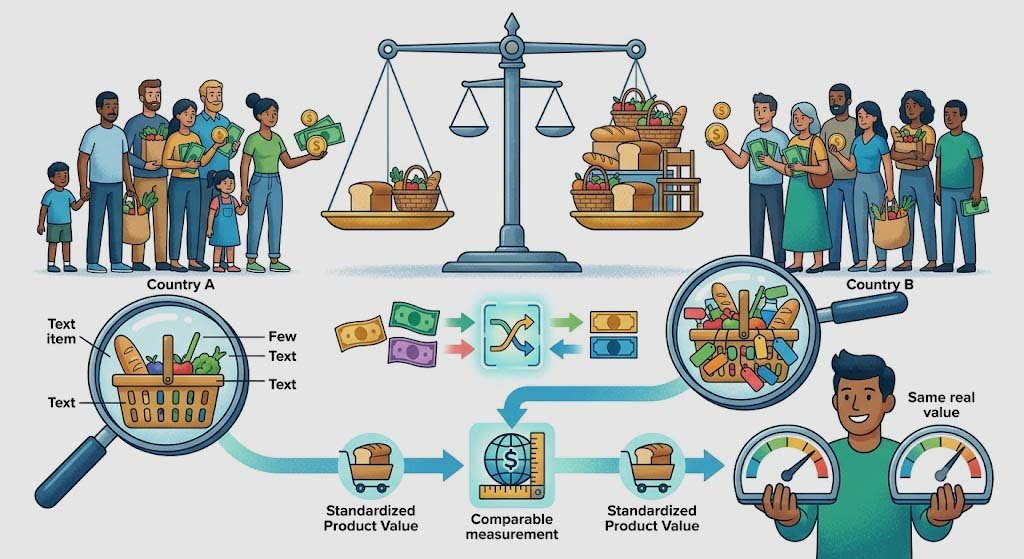
Before we dive into the list, it’s helpful to understand what GDP per capita (PPP) actually means. GDP per capita is calculated by dividing a country’s total economic output by the number of people living there. But without PPP adjustments, a dollar earned in one country might buy far less than a dollar earned elsewhere. PPP accounts for these differences, so we can compare how much an average person can actually buy in their own country . It’s a more accurate reflection of real living standards and spending power.
The Top 10 Countries
Based on 2025 IMF estimates compiled by Forbes India, here are the world’s top 10 countries with the highest spending power :
1. Liechtenstein – $201,112
This tiny Alpine state tops the list. With a population of just over 39,000, Liechtenstein’s wealth comes from high-value manufacturing and a well-developed financial sector . Its GDP per capita is more than eight times the global average .

2. Singapore – $156,969
Singapore is a major financial and trade hub with a services and technology-led economy. Its prosperity is built on heavy investment, public services, and a highly skilled workforce . It consistently ranks among the highest in the world for GDP per capita .
3. Luxembourg – $152,394
This small European nation’s wealth is driven by investment funds, cross-border banking, and corporate services, backed by political stability and a multilingual workforce . Like Singapore and Liechtenstein, Luxembourg benefits from a small population and a highly specialised economy.

4. Ireland – $147,878
Ireland’s high GDP per capita is largely due to its role as a base for multinational corporations, especially in technology and pharmaceuticals, which boosts productivity and export-driven growth . This makes Ireland one of the most prosperous countries in Europe .
5. Macao SAR – $132,648
This special administrative region of China is a global centre for tourism and gaming, contributing to its exceptionally high GDP per capita .
6. Qatar – $122,283
Qatar’s high-income levels are closely tied to its large natural gas and petroleum reserves. The country is also working to diversify its economy under its national vision plans .
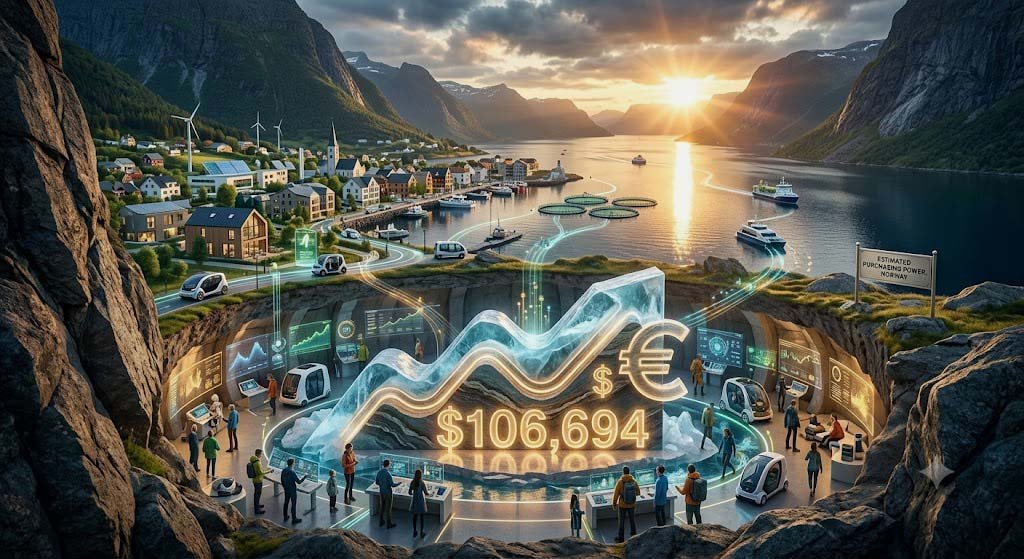
7. Norway – $106,694
Norway combines oil and gas production with a massive sovereign wealth fund that saves much of its resource income to back welfare and public services . This has made it one of the world’s wealthiest countries per person .
8. Switzerland – $97,659
Switzerland’s strong economy is built on world-class pharmaceutical companies, a stable financial sector, advanced research, and high-precision engineering, all supported by low inflation and reliable institutions.
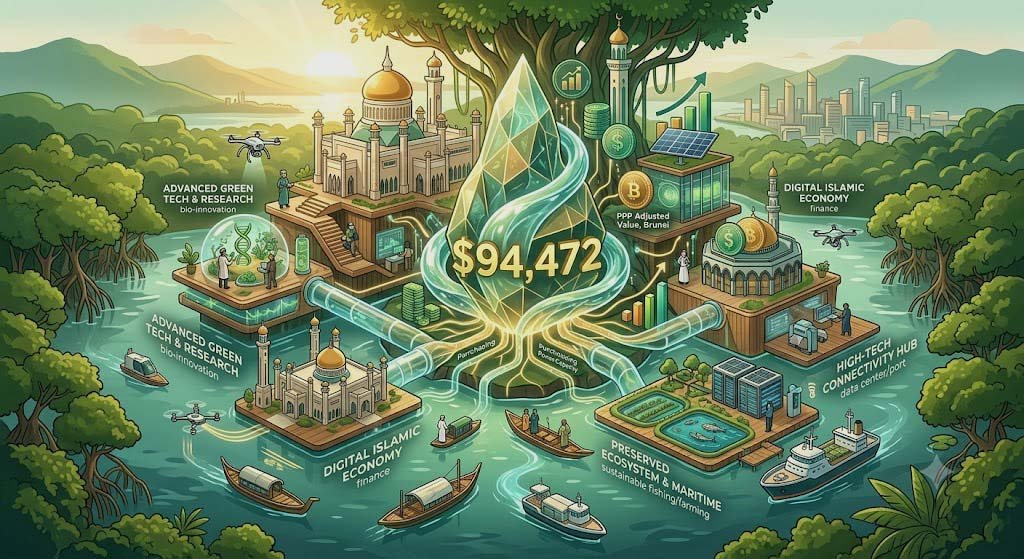
9. Brunei Darussalam – $94,472
Brunei’s economy continues to depend largely on liquefied natural gas (LNG) exports and the oil and gas industry. It is also gradually expanding into downstream energy and other activities to diversify its economy .
10. Guyana – $94,189
Guyana is a remarkable story. Offshore oil discoveries have swiftly lifted this South American nation into the high-income group. Economic growth is driven by increasing production, along with policies and practices that encourage saving and investing a portion of additional income.

A Note on the United States
The United States, the world’s largest economy, is also among the richest on a per-person basis. Its GDP per capita (PPP) is estimated at around $80,000 to $89,000, depending on the source . While it doesn’t crack the top ten, it remains a global economic powerhouse.
More Than Just Numbers
GDP per capita is a useful measure of spending power, but it doesn’t capture everything. A high national average may not reflect the financial reality of everyone, as it can hide large gaps in income and wealth among the population. It also doesn’t necessarily reflect the overall quality of life, healthcare, education, or social stability. However, these figures do give us a valuable snapshot of where people can afford to buy the most with their income.
About the Author
My name is Dua Qamar, and I am a content writer with a keen interest in global economics and the factors that shape prosperity.
Why I Wrote This Article:
I wrote this piece because the concept of spending power is often misunderstood. A country might have a large economy, but that doesn’t always translate into a high standard of living for its people. I wrote this article to explore the countries where people enjoy the greatest purchasing power and to discover the key factors behind their economic success.
How I Approached This Topic:
My research relied on data from the International Monetary Fund (IMF), compiled by sources like Forbes India and Worldometer. I also consulted analyses from The Financial Express and World Economics to verify the figures and understand the context behind the rankings.
Who This Article Is For:
This article is for curious readers, students of economics, and anyone who has ever wondered which countries offer the highest living standards and spending power.
The Message I Hope Readers Take Away:
Economic success comes in many forms. The countries at the top of the list prove that economic success is not determined by size alone. Through smart investment, efficient use of resources, and a strong focus on specializedindustries, even smaller nations can achieve exceptional levels of prosperity.
Written by: Dua Qamar
