


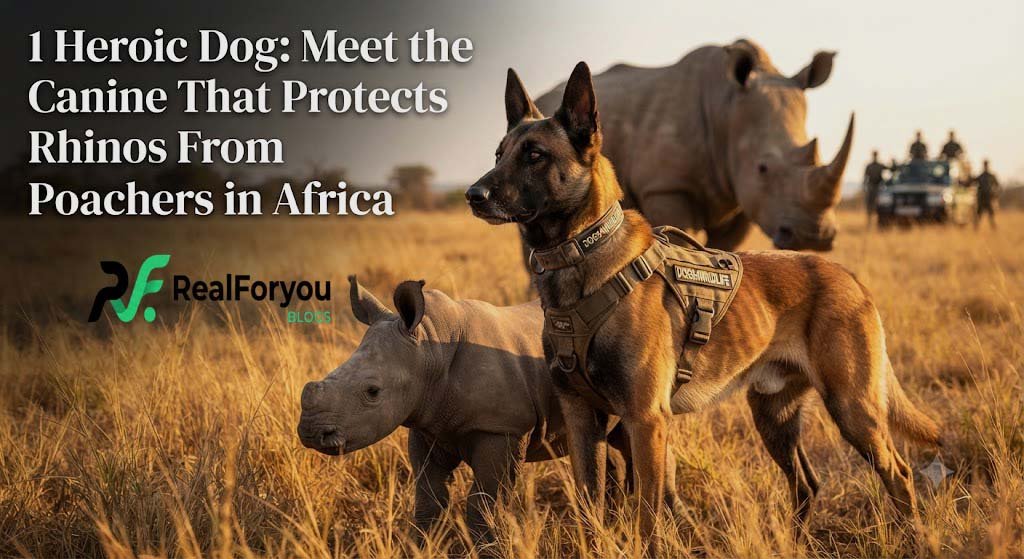
Meet the Dog That Protects Rhinos From Poachers In Africa
Introduction
In the vast, sun-scorched landscapes of southern Africa, a new hero is emerging in the fight against wildlife crime. It does not carry a weapon or wear a uniform, but its contribution to protecting endangered rhinos is nothing short of remarkable. This hero is a dog—a highly trained canine whose nose, speed, and loyalty are proving to be some of the most effective tools in the battle against poaching.
From the Welsh countryside to the frontlines of African conservation, these remarkable animals are tracking poachers, detecting illegal wildlife products, and saving rhino lives. Their stories are a testament to the power of human-animal partnership in the face of a grave crisis.
1 Heroic Dog: Meet the Canine That Protects Rhinos From Poachers in Africa1 Heroic Dog: Meet the Canine That Protects Rhinos From Poachers in Africa
The Welsh Connection to African Conservation
The journey of these anti-poaching dogs often begins far from Africa, in the sleepy Welsh town of Carmarthen . It is here that Dogs4Wildlife, a non-profit organization run by professional dog trainers Darren Priddle and Jacqui Law, breeds and trains dogs specifically for conservation work .
The pair was inspired to act after seeing a distressing photograph of a poached rhino on social media in 2015. As Priddle put it: “We can deploy dogs in the UK to track people… to look for drugs, firearms and explosives, so why could we not look at developing the dogs we were training to support conservation initiatives?
Since then, Dogs4Wildlife has sent 15 dogs to five sub-Saharan African countries. Typically, they breed one or two litters each year, with Belgian Malinois and Dutch Shepherds being the preferred breeds for tracking, while Labradors and Spaniels are used as detection (sniffer) dogs . The training begins almost from birth, with early exposure to different textures, temperatures, and odours to stimulate brain development and prepare them for their life-saving roles .
On the Frontline: How These Dogs Make a Difference
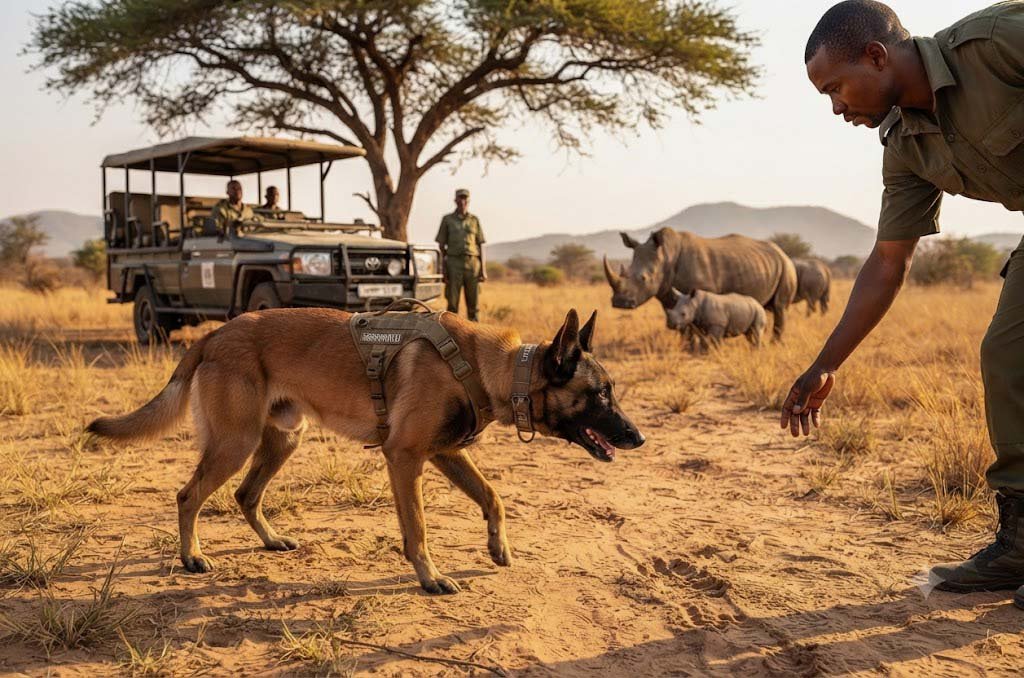
Once deployed, these dogs become an integral part of anti-poaching units. Their abilities extend far beyond what human rangers can achieve alone.
One of the most dramatic examples occurred in Zimbabwe, where a Belgian Malinois named Shinga tracked a poacher for 2.8 miles, following a trail of blood, footprints, and tire marks . The dog led an anti-poaching team directly to the poacher’s home, resulting in a successful arrest . This ability to track at night and cover as much as 10 kilometers an hour in pitch darkness gives rangers the power to “own the night,” a crucial advantage against poachers who operate under cover of darkness .
But the dogs’ contributions are not only about catching criminals. Their presence alone acts as a powerful deterrent . The knowledge that an anti-poaching unit is equipped with a specialist dog that can reliably track and apprehend poachers can be enough to prevent poaching attempts in the first place.
For example, at Zimbabwe’s Imire Conservancy, the K9 unit has had a massive impact. As Park Manager Reilly Travers explained, the dogs have “saved our guys on the ground on several occasions and they’ve been responsible for apprehending quite a few poachers” . The outcome has been a significant decrease in poaching activities.
A Growing Force in Conservation
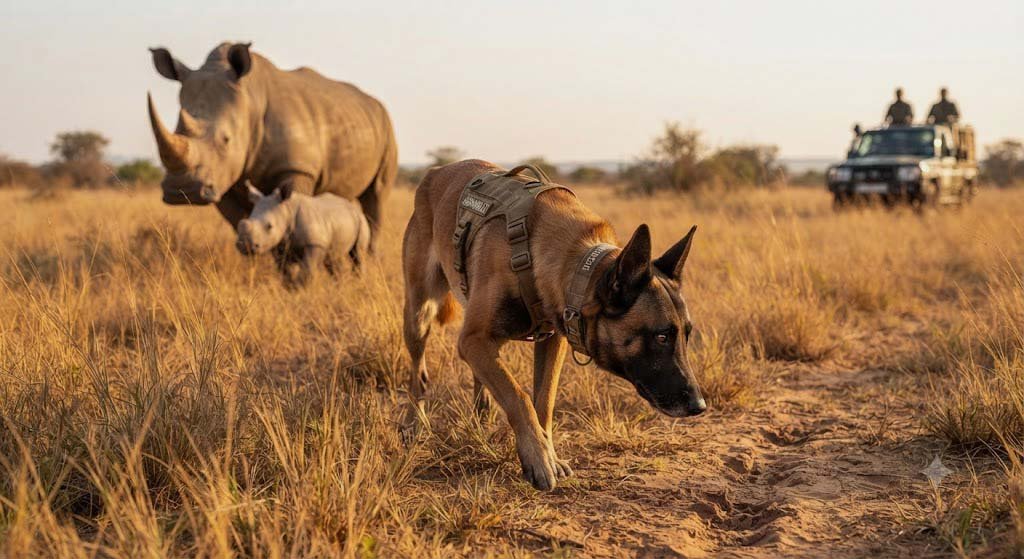
The success of these canine units has led to their wider adoption across Africa. A recent report from Project Rhino K9-Unit in KwaZulu-Natal, South Africa, highlights their impact over a 36-month period: the unit removed 3,374 snares, responded to 269 emergency callouts, and facilitated the arrest of 50 criminals . They have also assisted in recovering stolen goods and retrieving illegal weapons .
In Zambia, the K9 unit at Conservation South Luangwa has revolutionized the way rangers conduct roadblocks and search for illegal wildlife products. Godfrey Mwanza, head of the K9 Unit, explained that before the dogs, searching one vehicle took a long time, and they were “missing a lot of illegal wildlife products” . With the dogs, a search takes only minutes .
Similarly, Uganda has integrated 14 detection and tracker dogs into its enforcement structure. Over nine years, these dogs have been involved in 362 finds and have contributed to a 70% success rate in intelligence-led operations, leading to the dismantling of wildlife trafficking networks .
The Threat They Face and the Hope They Bring
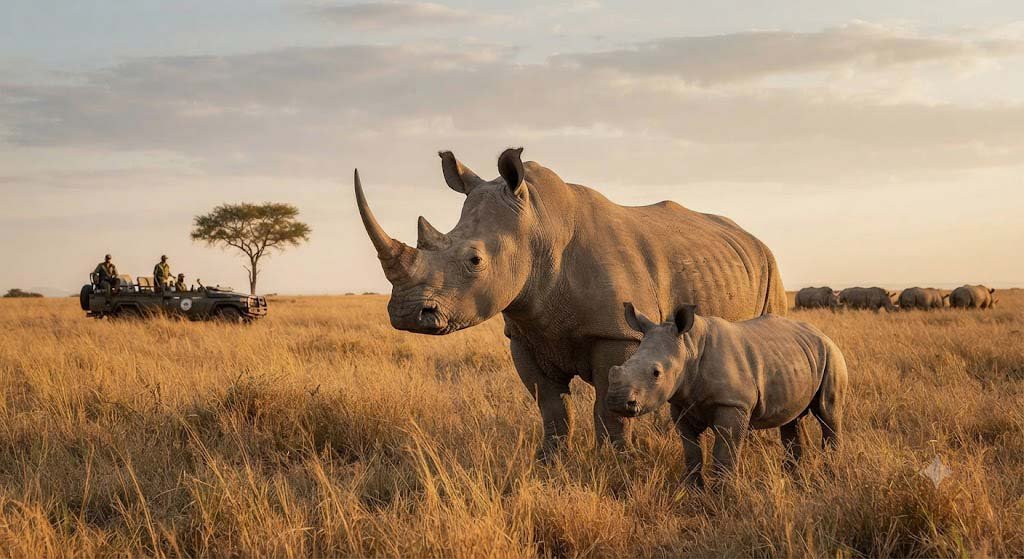
Despite these successes, the threat to Africa’s rhinos remains severe. A 2025 report found that while the rate of rhino poaching has dropped to its lowest level since 2011, the overall rhino population in Africa declined by 6.7% in 2024 . Factors such as prolonged drought and other environmental pressures continue to undermine conservation gains .
This is where the dogs prove invaluable. They are one of the most effective tools in the “frontline” against poaching, capable of tracking, detecting, and deterring criminals. Their work not only leads to arrests and seizures, but also helps to protect the entire ecosystem. When a rhino is killed, the impact is felt across the environment. As Jacqui Law observed: “You think it’s just a rhino that’s gone – it’s the whole ecosystem that suffers” .
Conclusion
The story of the dogs that protect rhinos from poachers is one of partnership, dedication, and hope. The training that begins in a kennel in Wales or a facility in South Africa leads to a real, tangible impact on the ground in Africa. These dogs are not just tracking and detecting; they are giving rangers the upper hand. They are making an important contribution to protecting these incredible animals and helping ensure they continue to thrive in the African wilderness. As the battle against poaching continues, these canine heroes remain a powerful symbol of what can be achieved when humans and animals work together for a greater good.
About the Author
My name is Dua Qamar, and I am a content writer passionate about wildlife conservation and the stories of hope that emerge from the fight to protect our planet’s most vulnerable species.
Why I Wrote This Article:
I wrote this piece because the story of anti-poaching dogs is one of the most inspiring examples of how innovation and partnership can make a real difference in conservation. These dogs are not just tools; they are companions and heroes, and their work deserves to be celebrated.
How I Approached This Topic:
My research involved examining reports from conservation organizations, news articles, and interviews with wildlife experts to paint a comprehensive picture of how dogs are used in anti-poaching efforts across Africa.
Who This Article Is For:
This article is for anyone who cares about wildlife, admires the bond between humans and animals, or is looking for a story of hope in the face of environmental challenges.
The Message I Hope Readers Take Away:
Conservation is a battle fought on many fronts. The use of highly trained dogs is a powerful testament to human creativity and our ability to work with nature to protect it.
Written by: Dua Qamar
