


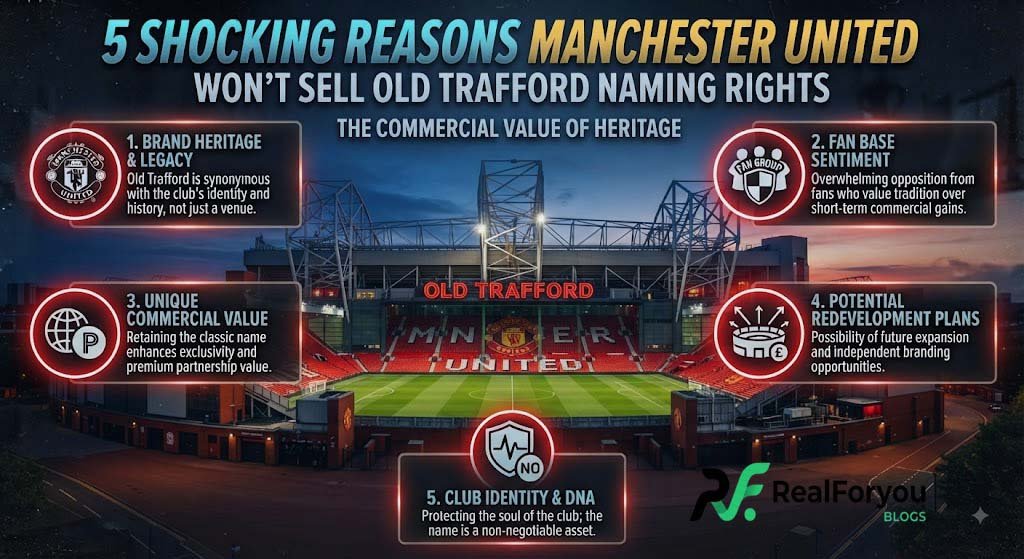
Manchester United’s Stance on Stadium Naming Rights: A Complex Decision
Introduction
For over a century, Old Trafford has remained one of football’s most hallowed grounds. Since its inauguration on February 19, 1910, the stadium has witnessed countless historic moments, hosting generations of Manchester United supporters who have filled its stands with unwavering devotion. However, as the club contemplates a momentous decision—constructing a new 100,000-seat venue adjacent to its historic home—a fierce debate has emerged: should the new stadium carry a sponsor’s name?
Contrary to what some might assume, Manchester United has not rejected the idea of selling naming rights. In fact, club leadership has openly acknowledged they are exploring this potentially lucrative revenue stream. Yet the decision remains far from simple, with passionate fan opposition, financial pressures, and historical legacy all competing for influence.
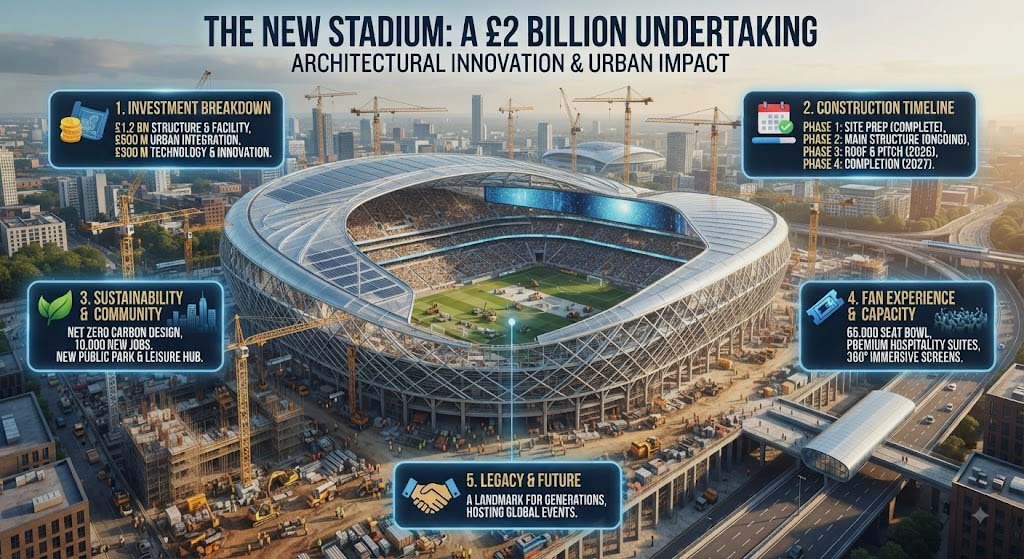
The New Stadium: A £2 Billion Undertaking
Manchester United’s vision for a new stadium is extraordinarily ambitious. The club has secured land roughly 350 metres northeast of Old Trafford, situated between Wharfside Way, Europa Way, and John Gilbert Way. The proposed 100,000-capacity arena, designed by Foster and Partners, would rank among the world’s largest football stadiums, with an estimated price tag of approximately £2 billion.
This project forms part of a broader 370-acre regeneration initiative expected to generate 48,000 jobs and 15,000 new homes. Co-owner Sir Jim Ratcliffe has framed it as an opportunity to construct the “world’s greatest football stadium” and the “Wembley of the North.” Even legendary former manager Sir Alex Ferguson has endorsed the move, urging supporters to “be brave and seize this opportunity to build a new home, fit for the future.”
However, the financial realities are sobering. United already carries over £1.3 billion in debt, and the stadium project will necessitate substantial borrowing or external investment. This is precisely where naming rights enter the equation.
The Naming Rights Debate: Open for Discussion
Despite what the title of this piece might suggest, Manchester United is not dismissing the possibility of selling naming rights. Club officials have been notably transparent about their position. Collette Roche, the club’s chief executive for New Stadium Development, confirmed that the club has openly discussed the prospect of selling naming rights for the stadium, describing it as “an important revenue stream.”
CEO Omar Berrada has reinforced this perspective, stating the club is “not closing any doors” regarding naming rights and expressing a desire for “the stadium to give us additional revenues for us to be able to invest into the team.” The approach has been characterized as “sanity, not vanity”—a practical acknowledgment that affordable ticket prices and on-field competitiveness depend on maximizing revenue channels.
The club’s existing commercial partnerships offer insight into what might be achievable. Snapdragon, United’s current shirt sponsor, has already signaled potential interest in expanding their partnership. Snapdragon’s chief marketing officer remarked: “If it makes sense, we are always looking out for opportunities.” The shirt deal is reportedly worth approximately £60 million annually, and a naming rights agreement could add tens of millions more each year.
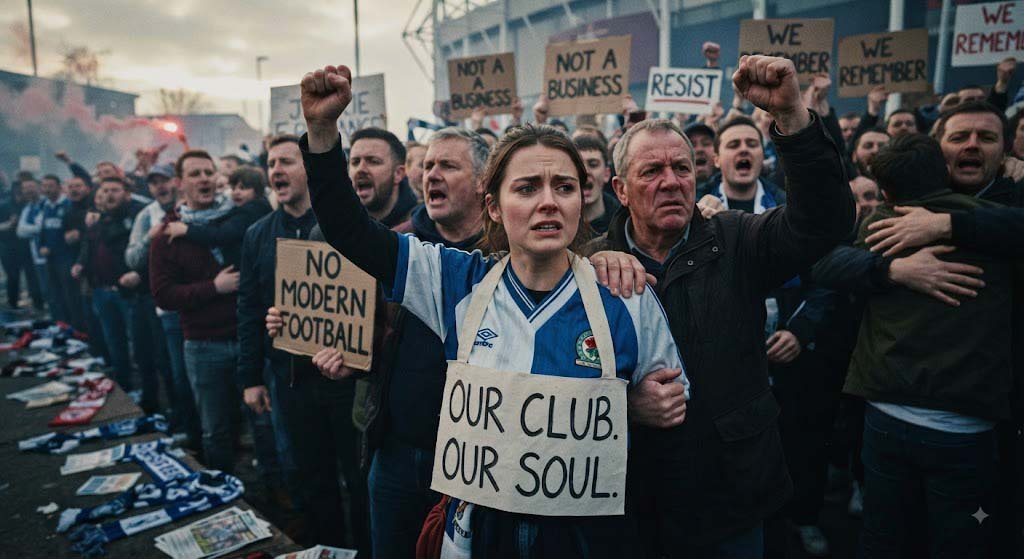
Fan Resistance: The Emotional Dimension
Despite the financial arguments, many supporters remain deeply opposed to any corporate rebranding. Old Trafford’s name carries over a century of history and identity that cannot simply be replaced by a commercial tagline. As one fan expressed: “Calling it anything other than Old Trafford is going to feel so wrong.
Some names hold generations of memories and emotional value that money can never truly replace.
Surveys conducted by the Manchester United Supporters’ Trust (MUST) indicate that supporters are nearly evenly divided, with roughly half preferring to remain at Old Trafford and the other half supporting a move to a new stadium. Among regular match attendees, sentiment often leans toward preserving tradition.
Steve Crompton of fan group The 1958 voiced concerns that demolishing Old Trafford would diminish the emotional significance of memorial events: “You might put the Munich clock somewhere else, but when it comes to memorial day, it’s not got the same value anymore.”
Younger supporters have also expressed opposition. Luca Black, chair of the Manchester United Youth Supporters Club, noted: “It became clear straight away that all the group chats were blowing up… they don’t want to leave. Old Trafford feels like home to many supporters because of its history, character, and unique atmosphere.”

A Look Back: Why Old Trafford Remained Largely Unchanged
The current stadium has resisted corporate naming for decades. In 2005, commercial director Andy Anson made the club’s position clear, saying that Old Trafford would keep its traditional name and that a naming-rights agreement was not being considered. However, discussions about the idea had already taken place during the 1990s. Discussions during the 1990s and 2000s with telecommunications companies and financial institutions consistently fell through, partly due to fan opposition and the recognition that Old Trafford’s name carries intrinsic brand value.
The Glazer family, who assumed ownership in 2005, had experience with stadium naming rights through their ownership of the Tampa Bay Buccaneers. They reportedly pursued deals worth £10-15 million annually during the late 2000s, but resistance from supporters and the 2008 financial crisis prevented any agreement from materializing.
The club did, however, sell naming rights for its training ground—the Aon Training Complex from 2013—demonstrating a willingness to monetize other assets while preserving Old Trafford’s identity.
What Lies Ahead
The new stadium’s final name remains uncertain. Roche has admitted: “I don’t know what the stadium will be called.” The club has consulted its Fan Advisory Board on naming rights, acknowledging that fan input carries weight. Some supporters have proposed compromises like “New Trafford” or retaining “Old Trafford” within a hybrid name—for instance, “Snapdragon Stadium at Old Trafford.”
Ultimately, the decision will balance financial imperatives against emotional heritage. As one fan reasoned: “If this helps bring in world-class players and gets United competing for trophies again, plenty of fans will eventually make peace with it.”
Conclusion
Manchester United is not refusing to sell naming rights—rather, they are carefully weighing a decision that carries profound financial and emotional implications. The new stadium represents both a once-in-a-century opportunity and a potential loss of identity. Whether the club ultimately sells naming rights or finds another path, the debate reflects a deeper tension in modern football: how to honour tradition while securing the financial resources needed to compete at the highest level. For now, the name “Old Trafford” remains, but its future is anything but certain.
About the Author
My name is Dua Qamar, and I am a content writer with a passion for football culture, club history, and the intersection of sport and business.
Why I Wrote This Article:
I wrote this piece because Manchester United’s stadium decision is one of the most significant moments in the club’s modern history. The naming rights debate touches on issues of identity, legacy, and commercial reality that affect clubs across the football world. I wanted to explore the complexities behind a seemingly straightforward question: what should a stadium be called?
How I Approached This Topic:
My research drew on reports from the BBC, The Sun, Manchester Evening News, Sports Business Journal, and other sources covering United’s stadium plans and the club’s historical stance on naming rights. I aimed to present a balanced view by considering both the club’s financial needs and the strong emotional bond supporters have with Old Trafford.
Who This Article Is For:
This article is for Manchester United supporters, football enthusiasts, and anyone interested in the business and culture of sport. It offers insight into a decision that will shape the club’s identity for generations to come.
The Message I Hope Readers Take Away:
The naming rights debate is not just about money—it is about what a club values and how it balances tradition with the demands of modern football. Whatever choice Manchester United makes, it will become a significant moment in the club’s history.
Written by: Dua Qamar
