


The Ultimate Mother’s Day Gift? One Husband Tries Labor Pain
Introduction
What do you give the woman who brought your children into the world? Chocolates are thoughtful. A spa day is wonderful. But for Kim Holderness, a mother of two, nothing demonstrated understanding quite like watching her husband, Penn, endure the agony of simulated childbirth. The result was a viral sensation that had millions laughing—and wincing—as one father discovered exactly what his wife had gone through to deliver their children.
The Concept Behind the Gesture
Kim Holderness, one half of the viral video family behind hits like “Christmas Jammies,” conceived the idea as an unconventional Mother’s Day tribute. Penn, a willing participant though hardly an eager volunteer, agreed to be connected to a labor simulator for a video that would ultimately amass over 1.7 million views.
“It was my idea, obviously. Kim explained to TODAY Parents that Penn would never have willingly signed up for something like this. “He is truly a wonderful husband and father, but the reality is that men cannot fully understand the physical and emotional demands of carrying, giving birth to, and feeding a baby.”
The Simulation Experience
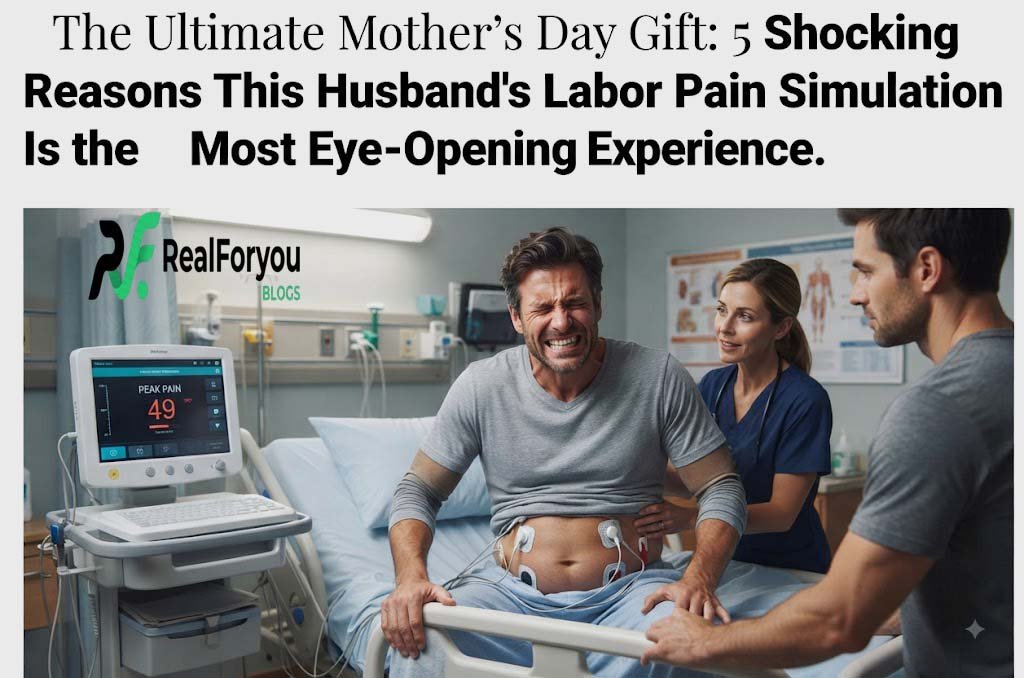
Penn was connected to a device that delivered electrical pulses to his abdominal muscles, replicating the sensations of uterine contractions. With 50 pounds of simulated pregnancy weight strapped to his frame, he was guided through the various stages of labor—from initial contractions to the “active” phase where things become genuinely intense.
The footage captures Penn writhing, shouting, and pounding the table as contractions hit. At one point, he turned to Kim and asked how long it would last ” Her response? “Just like for 10 hours.” He also described the sensation as feeling like “someone is trying to push something out of my stomach through my anus.”
The Medical Reality Check
Dr. Sameh Toma, the physician who facilitated the simulation, made a sobering admission: the “contractions” Penn experienced were likely only one-third of what women actually endure during childbirth.
Penn’s reaction spoke volumes. Following the experience, he remarked that if what he felt represented only a fraction of the real pain, he would request an epidural in the second trimester. “I was already pretty blown away by my wife, who had natural childbirth for the first one, but now I am even more impressed,” he confessed.
The 50-pound pregnancy belly alone proved torturous. “I was walking around the house, breathing heavily, before eventually sitting down.” There was this crazy weight on my chest, and my lower back really hurt after,” Penn recalled. He admitted to “completely cheating” and having a beer afterward, noting that everyone has to know where to draw the line.

Why It Connected with Audiences
The video resonated because it brought humor to a universal experience: the disconnect between what men imagine childbirth to be and the physical reality women face. Research indicates that expectant fathers often feel overwhelmed and inadequate during labor, struggling with the suffering they witness their partners enduring. The simulation, while imperfect, offered a window into that experience from an entirely new perspective.
Studies of fathers who have accompanied their partners through delivery reveal that the experience is multidimensional. Men often feel both vulnerable and committed, needing support themselves while attempting to support their laboring partners. The simulation, in its own way, helped Penn bridge that gap.
The Verdict: Gift of the Year?
Viewers responded with overwhelmingly positive reactions. Whether it deserves the title of “best Mother’s Day gift ever” ultimately depends on personal preference. Some mothers might still prefer a relaxing spa retreat or a thoughtful piece of jewelry. However, as a gesture of empathy, understanding, and sheer willingness to endure discomfort for your partner’s sake, the labor pain simulation is difficult to surpass.
As one exhausted husband put it after his own simulation experience: “Mom, if anything that I just experienced is anywhere close to what I did to you all those years ago, I’m sorry, you’re like a superhero. You’re one tough momma.”
And that, perhaps, is the true gift—an apology, an acknowledgment, and a newfound respect for mothers everywhere.
About the Author
My name is Dua Qamar, and I’m a content writer passionate about parenting, family relationships, and the creative ways we express love to those who matter most.
Why I Wrote This Article:
The Holderness family video captures something I find genuinely captivating: the extraordinary lengths we go to for the people we love. It’s funny, cringeworthy, and genuinely heartwarming all at once. I wanted to share this story to celebrate the creativity and empathy behind the gesture, while also acknowledging the deeper message it carries—that understanding and appreciation are powerful gifts in their own right.
How I Approached This Topic:
I drew on reports of the Holderness family’s labor simulation from TODAY.com and related outlets, as well as research on fathers’ experiences of childbirth from academic sources. I focused on the human story behind the viral video and its significance as a Mother’s Day gesture.
Who This Article Is For:
This piece speaks to anyone who has ever wondered what goes into a truly memorable Mother’s Day gift, or for those who appreciate a heartwarming story about love, sacrifice, and a touch of humor.
The Message I Hope Readers Take Away:
The most meaningful gifts aren’t always the most expensive ones. Sometimes, the best way to say “I love you” is to say “I understand.” And if you can make people laugh along the way, even better.
Written by: Dua Qamar
