


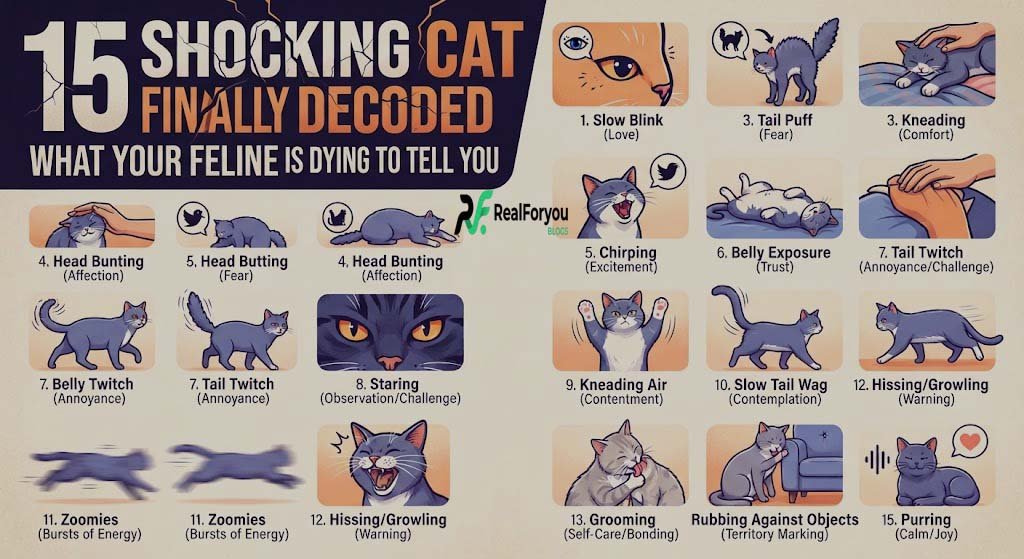
15 Impressive Cat Behaviors and What They Really Mean
Cats can be mysterious animals. One moment, they may be rubbing against your legs, and the next, they are hiding under the furniture or staring at a wall. Their behavior can sometimes seem confusing, but many of these actions are meaningful forms of communication.
Understanding cat behaviors and their meanings can help owners build stronger relationships with their pets. Instead of simply reacting to what a cat does, we can learn to recognize what its body language, sounds, and habits may be telling us.
1. Slow Blinking at You
When a cat looks at you and slowly closes its eyes, it may be showing that it feels comfortable around you.
A slow blink often signals friendliness in cats. Some cat owners even respond by slowly blinking back. This simple exchange can become a gentle way of communicating trust.
2. Rubbing Against Your Legs
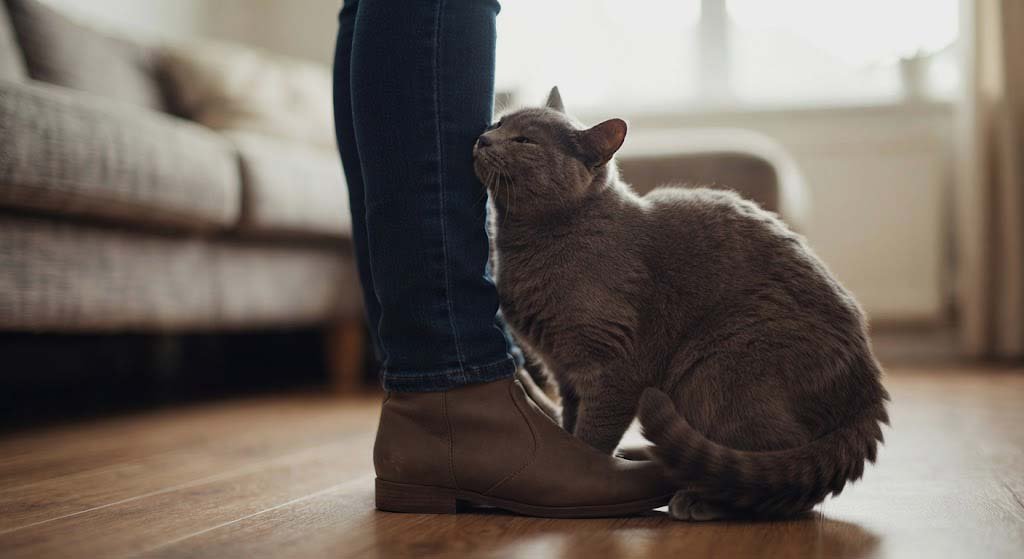
When your cat repeatedly rubs against your legs, it may be greeting you and reinforcing its familiarity with you.
Cats also have scent glands around areas of their face and body. Rubbing can therefore serve both a social and scent-marking purpose.
It is often one of the more obvious signs that your cat feels comfortable around you.
3. Kneading With Their Paws
Kneading ranks among the most familiar things a cat does.
A cat may push its front paws repeatedly against a blanket, pillow, or your lap. This behavior begins during kittenhood, when kittens knead around their mother while nursing.
Adult cats may continue kneading when they feel relaxed and secure.
4. Bringing You Toys or Other Objects
Some cats carry toys around the house and may even bring them to their owners.
This can be connected to play, hunting instincts, or social interaction. Your cat may be inviting you to participate in a game or treating you as part of its social group.
5. Showing Its Belly
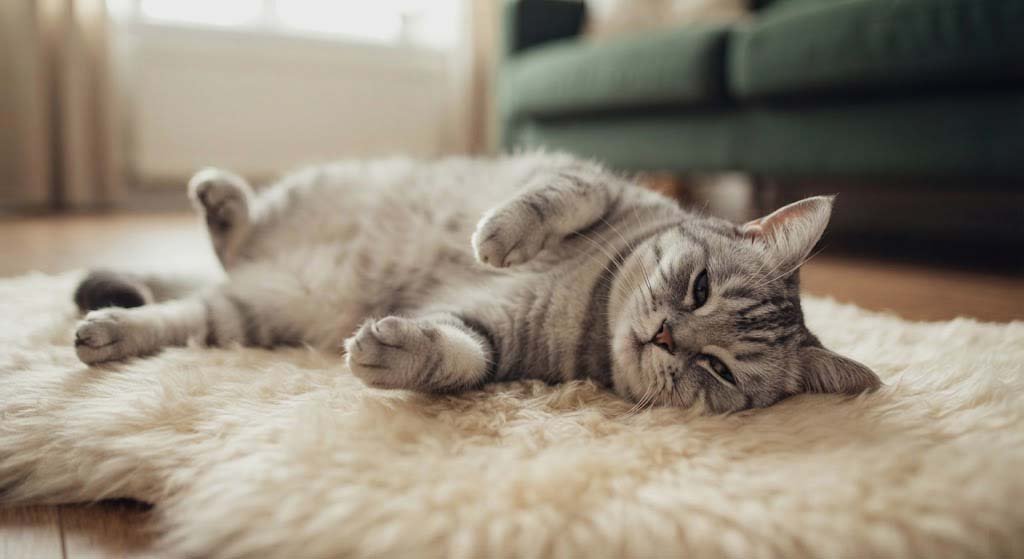
A cat lying on its back and exposing its belly may indicate that it feels relaxed and safe.
However, this does not always mean that the cat wants a belly rub. The stomach is a vulnerable area, and some cats may react defensively if touched there.
Pay attention to the rest of the cat’s body language before reaching for its belly.
6. Purring
Purring is commonly associated with happiness, comfort, and relaxation.
However, purring does not always mean a cat is happy. Cats may also purr when they are stressed, frightened, uncomfortable, or seeking reassurance.
This is why purring should be interpreted alongside posture, appetite, activity, and other behaviors.
7. Tail Held Upright
A cat walking toward you with its tail held upright is often displaying a friendly or confident posture.
A relaxed upright tail can be a positive social signal, especially when combined with relaxed ears and normal body movement.
The tail can provide useful clues about a cat’s emotional state.
8. Tail Puffing Up
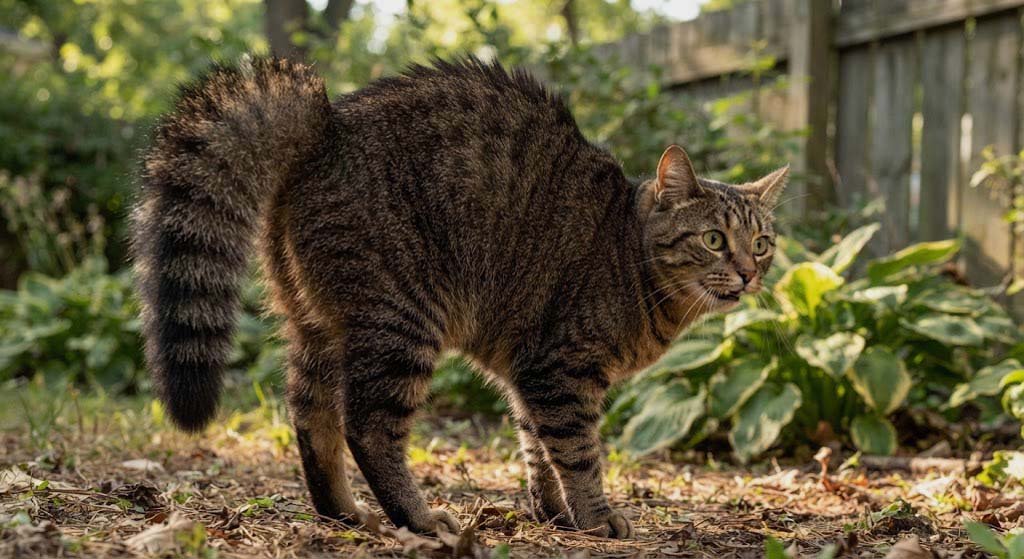
A suddenly fluffy tail usually means something very different.
When a cat’s fur stands out and its tail becomes large and bushy, the cat may be frightened, surprised, or highly stimulated.
This reaction makes the cat appear larger and can be part of its natural defensive response.
9. Hiding
Cats often hide when they feel nervous or want some quiet time.
A new home, unfamiliar visitors, loud noises, or changes in the environment can cause a cat to seek a hiding place.
Occasional hiding can be normal. However, a cat that suddenly begins hiding much more than usual may need closer attention, particularly if other changes in behavior appear.
10. Chattering at Birds
You may have seen your cat sitting near a window and making strange clicking or chattering sounds while watching birds.
This behavior is often associated with excitement and hunting instincts. The exact reason cats make these sounds is not completely understood, but the behavior commonly occurs when they are intensely focused on potential prey.
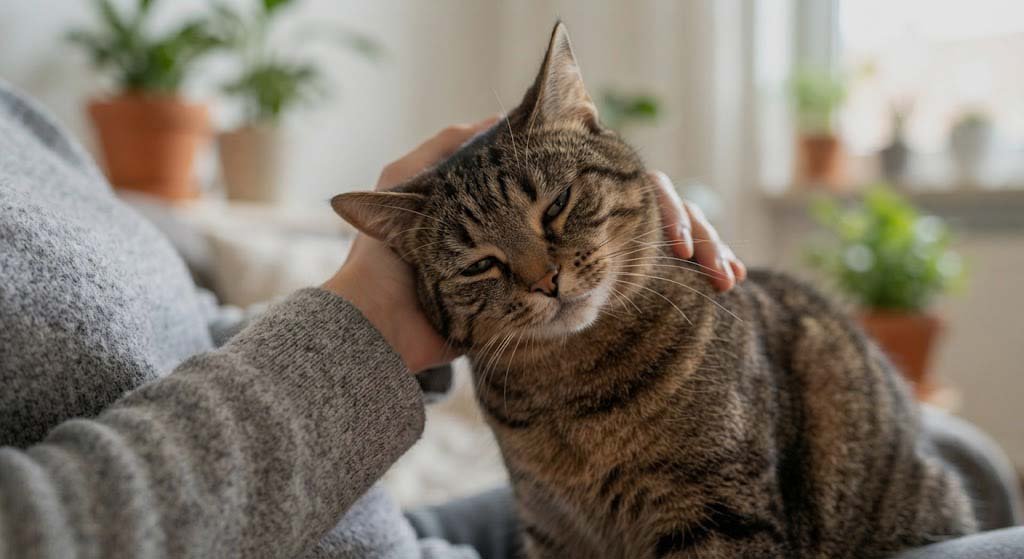
11. Head-Butting You
When a cat gently presses its head against you, this behavior is often called head bunting.
It can be a friendly social gesture and may also involve scent marking. Cats have scent glands around their heads, so this behavior can help reinforce familiarity.
A gentle head bump can therefore be a meaningful sign of social connection.
12. Following You Around the House
Some cats trail their owners as they move from room to room.
This may happen because the cat wants companionship, food, play, attention, or simply wants to know what you are doing. Cats can form strong social bonds with humans, even though they often express attachment differently from dogs.
Your cat’s decision to follow you may be its own quiet way of staying close.
13. Suddenly Running Around the House
Those sudden bursts of running, jumping, and racing through rooms are commonly called zoomies.
They are often a normal way for cats to release energy. Young cats especially may have these energetic periods after resting, playing, or using the litter box.
Providing appropriate toys and opportunities for safe activity can help cats express their natural energy.
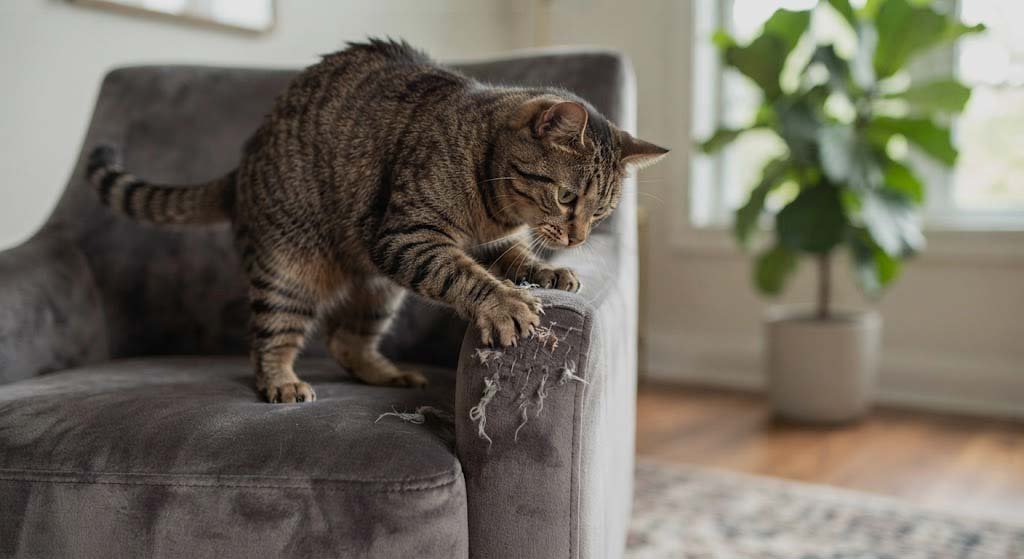
14. Scratching Furniture
Scratching is not necessarily your cat’s attempt to destroy your furniture.
Cats scratch for several natural reasons. It can help maintain their claws, stretch their bodies, mark territory, and release energy.
Providing scratching posts or suitable scratching surfaces can give your cat a safe place to perform this normal behavior.
15. Sleeping in Strange Places
Cats can sleep in surprisingly unusual locations: boxes, shelves, closets, baskets, windowsills, or even tiny spaces that seem impossible to fit into.
Cats naturally seek places that feel secure and comfortable. Elevated locations can also provide a good view of their surroundings.
A strange sleeping location is often simply your cat’s way of choosing its preferred resting environment.
How to Read Cat Behaviors Correctly
One important lesson about cat behaviors and their meanings is that you should not interpret a single action in isolation.
For example, a moving tail can mean different things depending on the situation. A purring cat may be relaxed or stressed. A hiding cat may simply want privacy, or it may be reacting to a change in its environment.
Look at several signals together:
Ear position
Tail movement
Eye expression
Body posture
Vocal sounds
Appetite
Activity level
Changes in normal routines
Sudden or persistent behavioral changes can sometimes indicate illness, pain, or stress. When unusual behavior continues or appears alongside other concerning symptoms, consulting a veterinarian is the safest approach.
Final Thoughts
Understanding cat behaviors and their meanings allows us to communicate with our pets in a completely different way. Cats may not speak human language, but they constantly communicate through their bodies, sounds, movements, and habits.
About Author
I, Dua Qamar, wrote this article because I believe that understanding animals begins with paying attention to them. A slow blink, gentle head bump, raised tail, playful zoomie, or quiet hiding place can all tell us something about how a cat is experiencing the world.
The more carefully we observe our cats, the easier it becomes to understand their individual personalities and needs.
Cats may be independent and mysterious, but their behavior is rarely meaningless. Sometimes, you simply have to learn how to listen without words.
Written by Dua Qamar

1 Comment
Pingback: Hidden Places Are Cat Favorites? 6 Proven Ways To Create S