


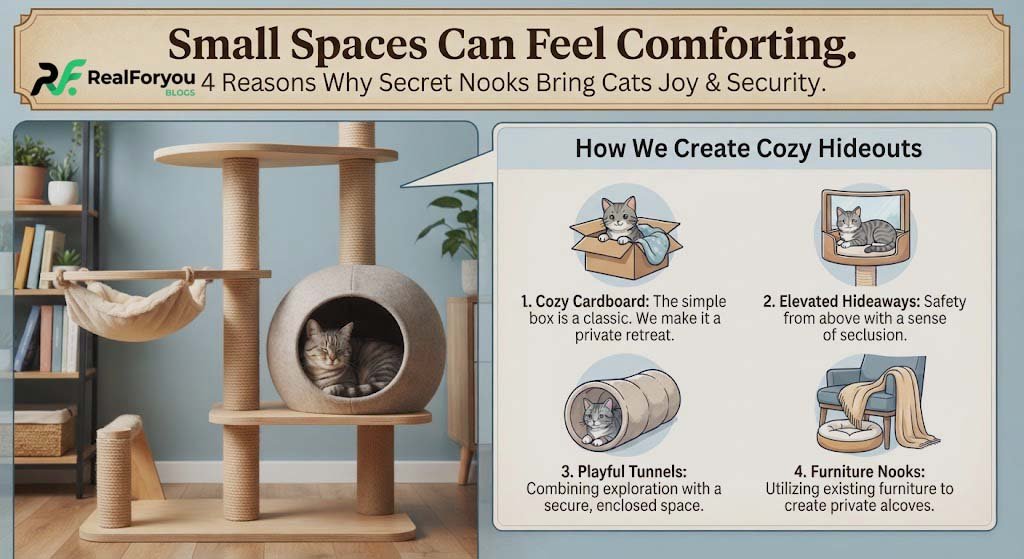
Why Do Cats Love Hidden Places? Understanding Why Cats Play and Relax in Secret Spots
If you have a cat, you have probably seen this funny habit: one minute your cat is walking around the house, and the next minute it has disappeared. You look under the bed, behind the sofa, inside a box, or under a table—and there it is, quietly watching everything.
This behavior can make cat owners wonder, why do cats love hidden places? Why do they choose small, dark spaces when comfortable beds and open areas are available?
The answer is closely connected to a cat’s natural instincts. Hidden places can make cats feel safe, provide privacy, help them observe their surroundings, and turn an ordinary room into an exciting playground.
In this article, I, Dua Qamar, explore why cats love hidden places, why cats play in hidden places, and what these secret spots can tell us about feline behavior.
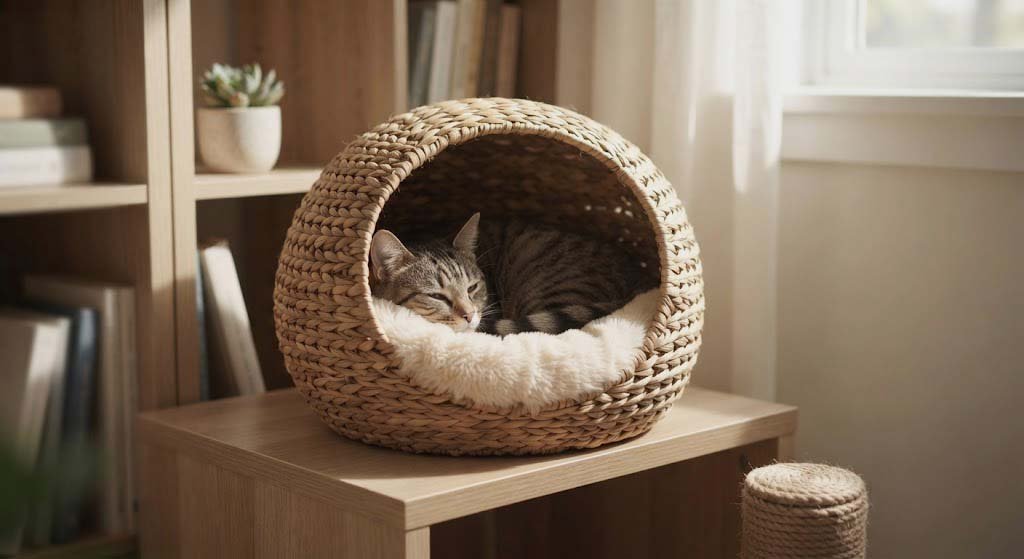
1. Hidden Places Make Cats Feel Safe
Cats are naturally cautious animals. Even domestic cats retain many instincts inherited from their wild ancestors.
A small enclosed space can provide protection from unexpected movement and noise. When a cat is inside a box, beneath furniture, or behind a curtain, it can relax while still keeping an eye on what is happening around it.
For a cat, a hidden place can feel like a private little shelter.
2. Cats Like to Watch Without Being Seen
One fascinating reason cats love hidden places is that hiding allows them to observe.
A cat sitting beneath a chair may be able to see your feet moving around the room without being noticed itself. This gives the cat an excellent opportunity to watch people, other animals, and interesting activities.
It is almost like having a secret observation post.
Your cat may look completely relaxed while quietly monitoring everything happening around it.
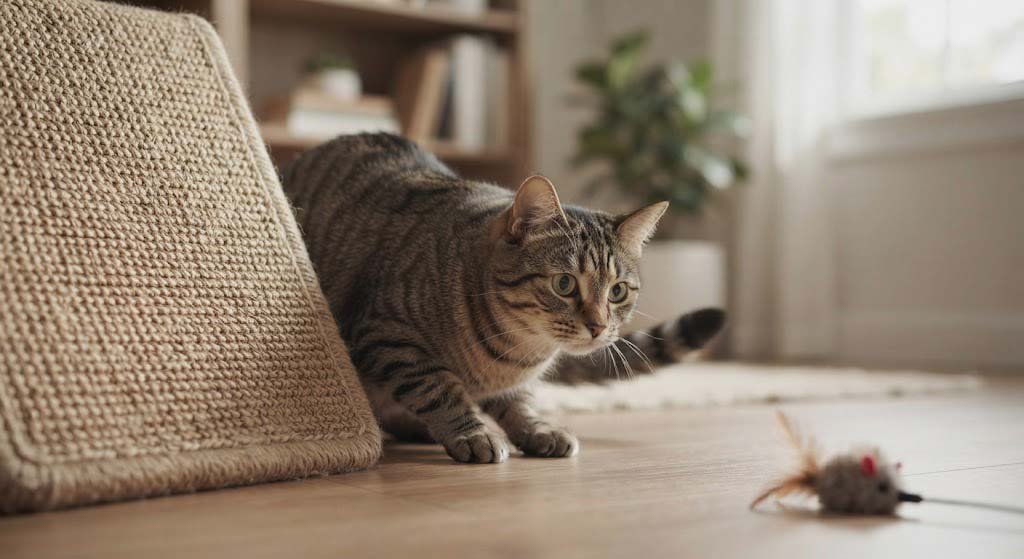
3. Small Spaces Can Feel Comforting
Cats often choose spaces that seem surprisingly small to humans.
Boxes, baskets, drawers, closets, and spaces beneath furniture can provide physical boundaries around the body. These enclosed surroundings may help a cat feel protected and comfortable.
This is one reason an expensive cat bed may be ignored while a simple cardboard box becomes the favorite sleeping spot in the house.
Sometimes cats simply prefer what feels secure rather than what looks attractive to us.
4. Hidden Places Are Perfect for Playing
Cats do not only use hidden spaces for sleeping. They also turn them into playgrounds.
A box can become a hiding station during a game. A cat may wait quietly inside and suddenly jump out at a toy, another cat, or a person’s moving feet.
This type of play allows cats to express their natural stalking and pouncing instincts.
When your cat hides behind the sofa and suddenly attacks a toy, it may not be trying to frighten you. It may simply be playing its own version of a hunting game.
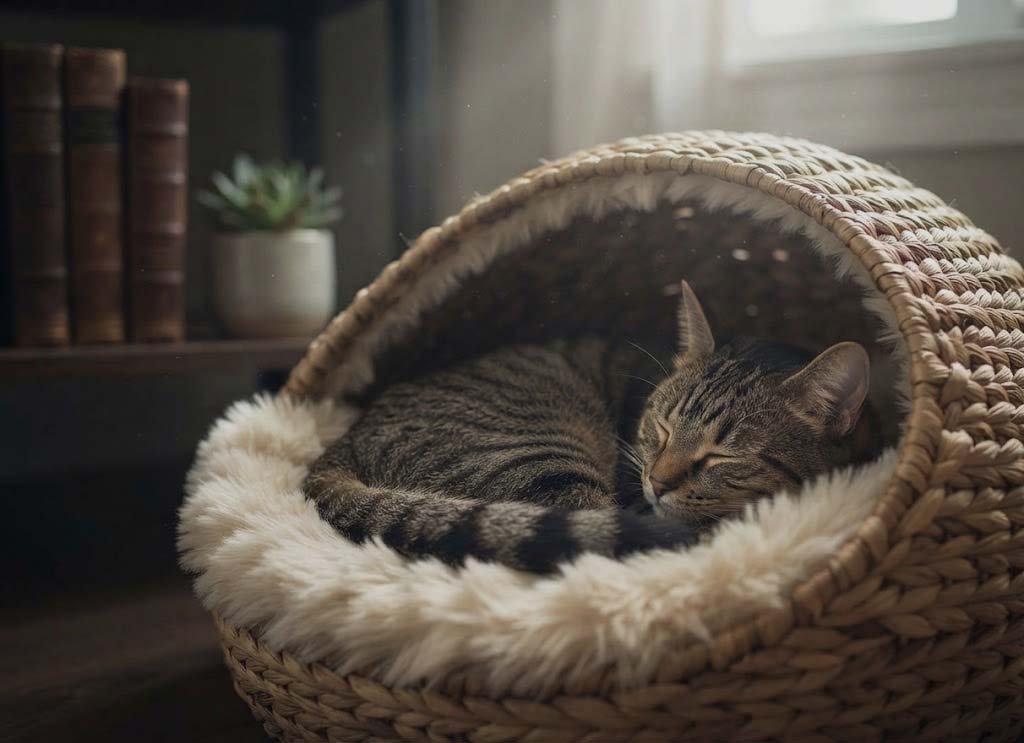
5. Hiding Helps Cats Practice Hunting Skills
In nature, cats often rely on stealth.
They may hide, observe prey, move slowly, and then suddenly make a quick attack. Even though a house cat does not need to hunt for food, these instincts remain part of its behavior.
Playing from hidden places gives cats an opportunity to practice stalking, waiting, chasing, and pouncing.
This is why interactive toys can become much more interesting when they move past a hiding spot.
6. Cats Enjoy Surprise
Cats can be very playful animals, and surprise is an important part of their games.
A cat hiding inside a box may wait for a toy to move past. Once the toy comes close enough, the cat can jump out.
The uncertainty of what will happen next can make play more exciting.
This is also why toys that move unpredictably can often hold a cat’s attention longer than objects that simply remain still.
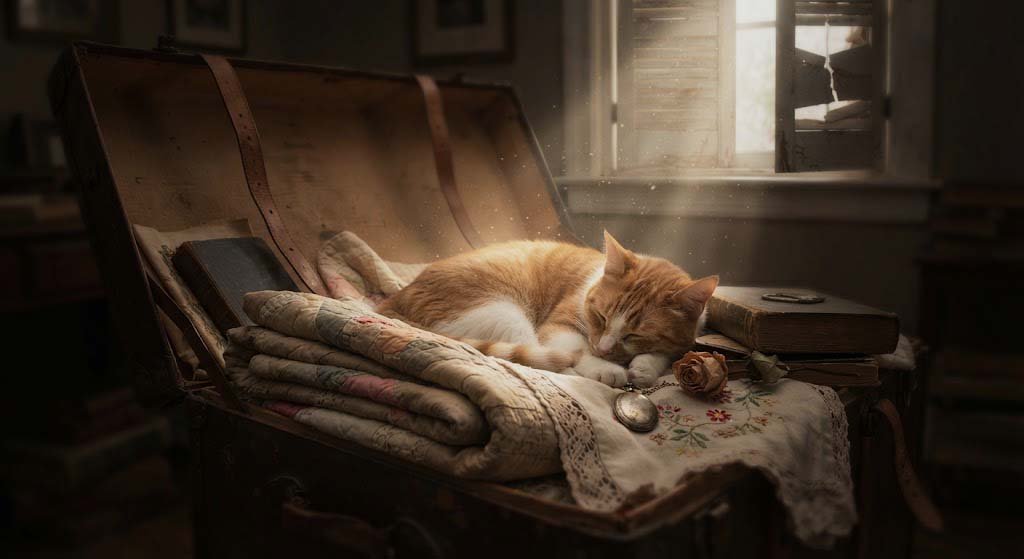
7. Hidden Places Offer Peace and Quiet
Sometimes your cat is not playing at all.
It may simply want some uninterrupted rest.
Homes can be noisy places. Children may be running around, visitors may arrive, televisions may be loud, and other pets may demand attention.
A quiet hiding spot gives your cat somewhere to retreat when it wants a break.
Providing a safe private area can therefore be especially helpful in busy households.
8. Cats May Hide When They Feel Overwhelmed
Although hiding is often normal, it can also be a response to stress.
A new home, unfamiliar visitors, loud construction, another animal, or a major change in routine can make some cats seek shelter.
If your cat hides temporarily after something unusual happens and then returns to its normal behavior, there may be little reason for concern.
However, persistent hiding combined with changes in eating, grooming, litter-box use, activity, or social behavior deserves attention.
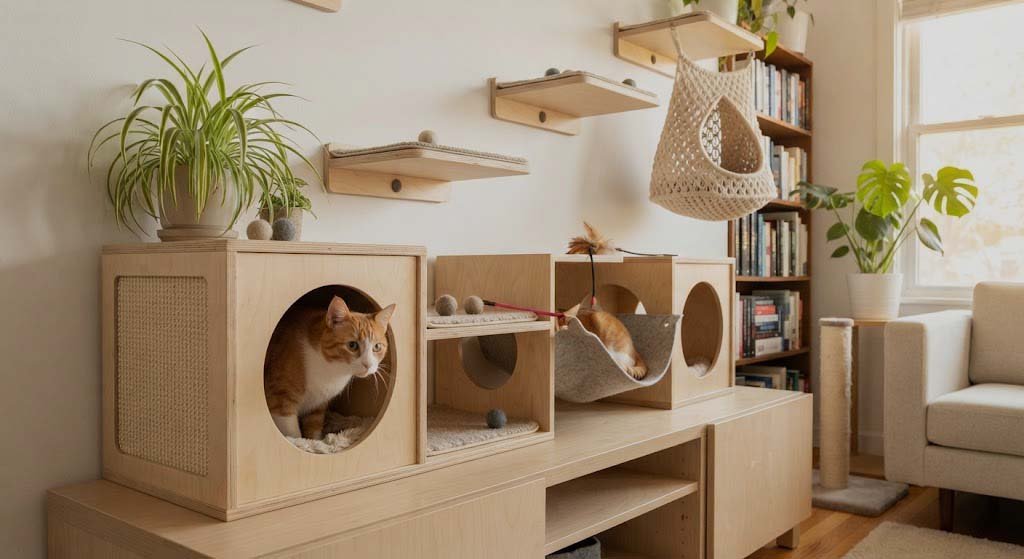
9. Your Cat May Have a Favorite Secret Spot
You may notice that your cat repeatedly chooses the same hidden location.
There is probably a reason.
The spot may have the right temperature, feel comfortable, provide a good view, or simply be associated with positive experiences.
Once a cat decides that a particular place is safe, it may return there repeatedly.
10. Hiding Can Be Part of a Cat’s Personality
Not all cats behave the same way.
Some cats are social and spend most of their time in open areas. Others are naturally cautious and prefer quiet corners.
A shy cat may hide more frequently than a confident cat. This doesn’t have to mean something’s wrong.
Understanding your cat’s normal personality is important because it helps you recognize genuine changes in behavior.
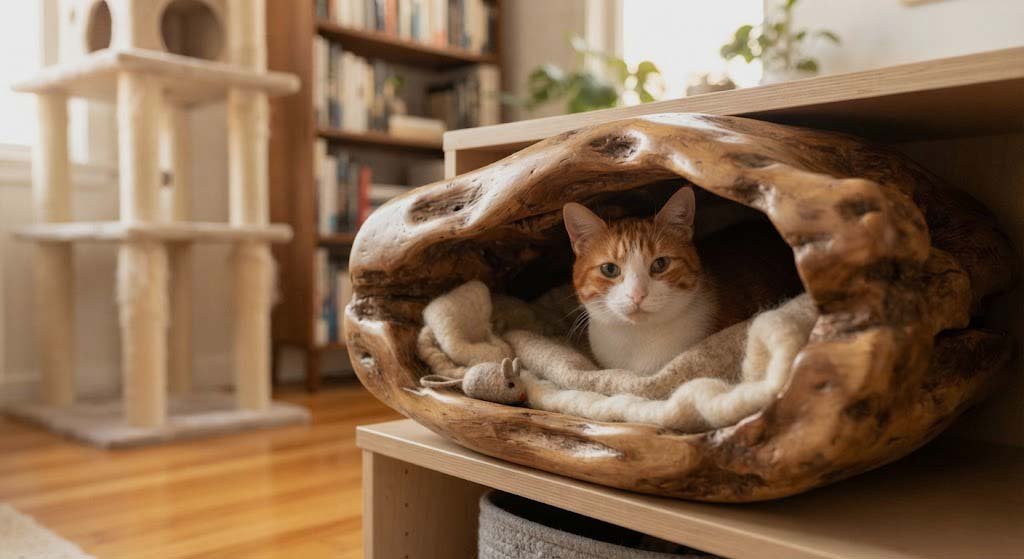
How to Create Safe Hidden Places for Your Cat
If your cat enjoys hiding, you can provide safe alternatives instead of allowing it to squeeze into potentially dangerous spaces.
Consider providing:
Cardboard boxes
Covered cat beds
Cat tunnels
Secure shelves
Quiet corners
Cat trees with enclosed sections
Comfortable spaces away from heavy household traffic
Make sure hidden areas are free from electrical wires, chemicals, unstable objects, or places where your cat could become trapped.
When Hiding May Be a Warning Sign
Normal hiding usually fits into your cat’s regular routine.
If your cat suddenly starts hiding constantly or refuses to come out for food, play, or normal interaction, pay attention.
A sudden behavioral change can sometimes be associated with stress, discomfort, or illness. If the change continues or is accompanied by other concerning symptoms, contacting a veterinarian is the safest approach.
Final Thoughts
So, why do cats love hidden places?
For many cats, hidden places provide safety, privacy, entertainment, and a chance to express natural instincts. A box can become a bedroom, a tunnel can become a hunting ground, and the space behind a sofa can become a secret observation point.
About Author
I, Dua Qamar, wrote this article because I believe that understanding small feline behaviors can help people develop stronger relationships with their pets.
The next time your cat disappears into a box or hides behind the furniture, don’t immediately assume that something is wrong. Your cat may simply be enjoying its private little world.
And when it suddenly jumps out during play, remember: that tiny hiding place may be your cat’s favorite hunting playground.
Written by Dua Qamar
