


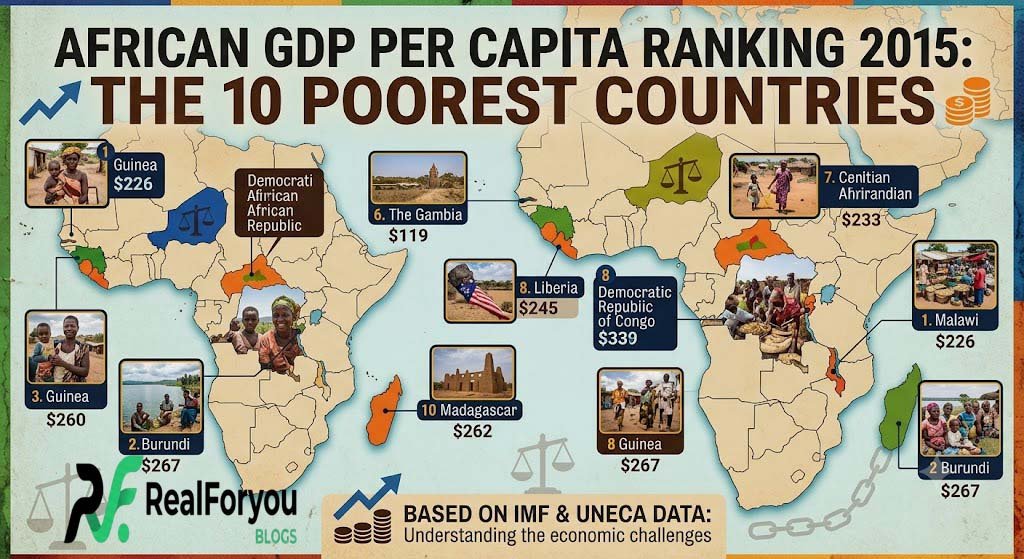
10 Poorest Countries in Africa in 2015 by GDP Per Capita
The year 2015 painted a challenging economic picture for many African nations. While the continent as a whole possesses immense natural wealth, a combination of factors—from political instability and conflict to weak infrastructure and overdependence on agriculture—kept several countries trapped in a cycle of poverty.
Based on data from the International Monetary Fund (IMF) and the United Nations Economic Commission for Africa (UNECA), GDP per capita serves as a key indicator of average economic output per person. In 2015, the gap between Africa’s richest and poorest nations was stark, with the bottom ten countries recording figures far below the global average of approximately $10,000 .
Here are the 10 poorest countries in Africa in 2015, ranked by GDP per capita (in current USD).
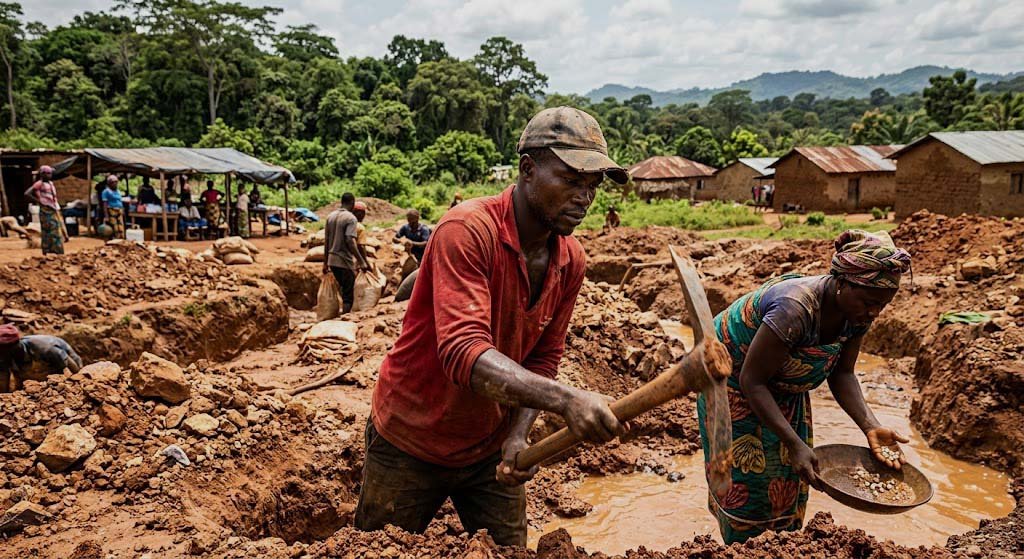
10. Guinea – $545
Guinea, a West African nation rich in gold and diamond deposits, paradoxically struggled with a low income per capita of approximately $545 in 2015 . Despite its resource wealth, the country faced significant financial challenges following its independence from France, with weak infrastructure and governance issues limiting the benefits of its natural resources from reaching the broader population .
9. Madagascar – $463
The island nation of Madagascar, which is the fourth-largest island in the world, recorded a GDP per capita of about **$463** in 2015, making it one of Africa’s lowest-income countries. More than 90% of the population lived on less than $2 per day, with the economy heavily dependent on agriculture. Political instability and weak governance were identified as primary drivers of this persistent poverty .
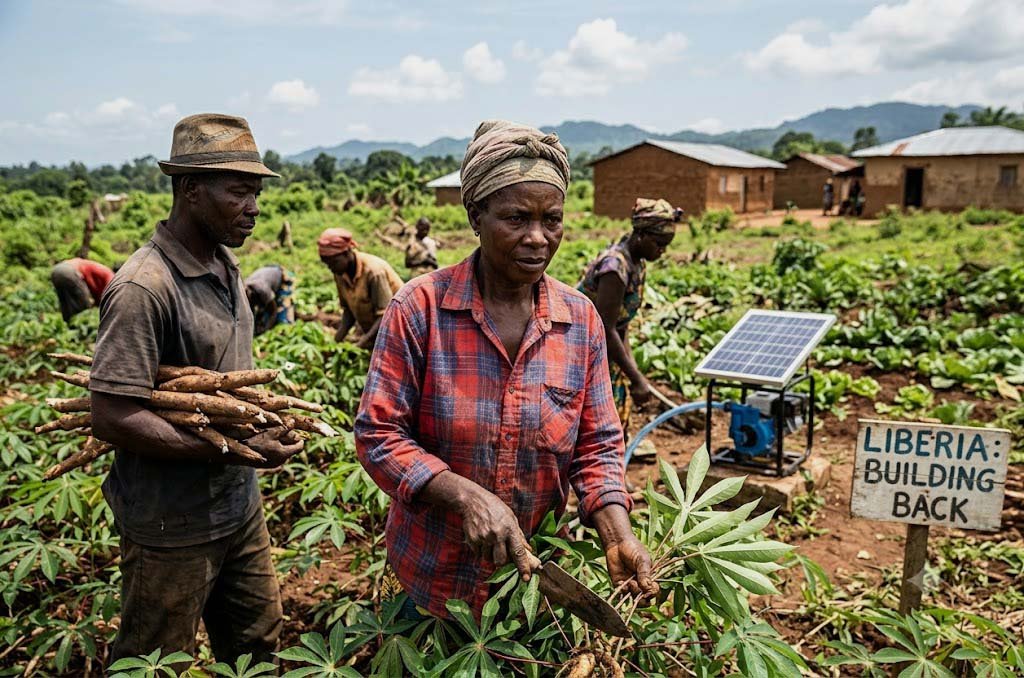
8. Liberia – $454
Liberia, located on the West African coast, had a GDP per capita of approximately $454 in 2015 . Prior to its civil wars, Liberia was considered a relatively developed country. However, decades of conflict not only devastated the economy but also caused significant loss of life, setting the nation back considerably. The country was also grappling with the aftermath of the devastating Ebola outbreak during this period .
7. Niger – $415
The landlocked nation of Niger, the largest country in West Africa by area, recorded a GDP per capita of approximately $415 in 2015 . More than 80% of its territory is covered by the Sahara Desert, severely limiting arable land and economic activity. The economy remains heavily reliant on subsistence agriculture and fishing, with outdated techniques keeping incomes low and below the international poverty line .
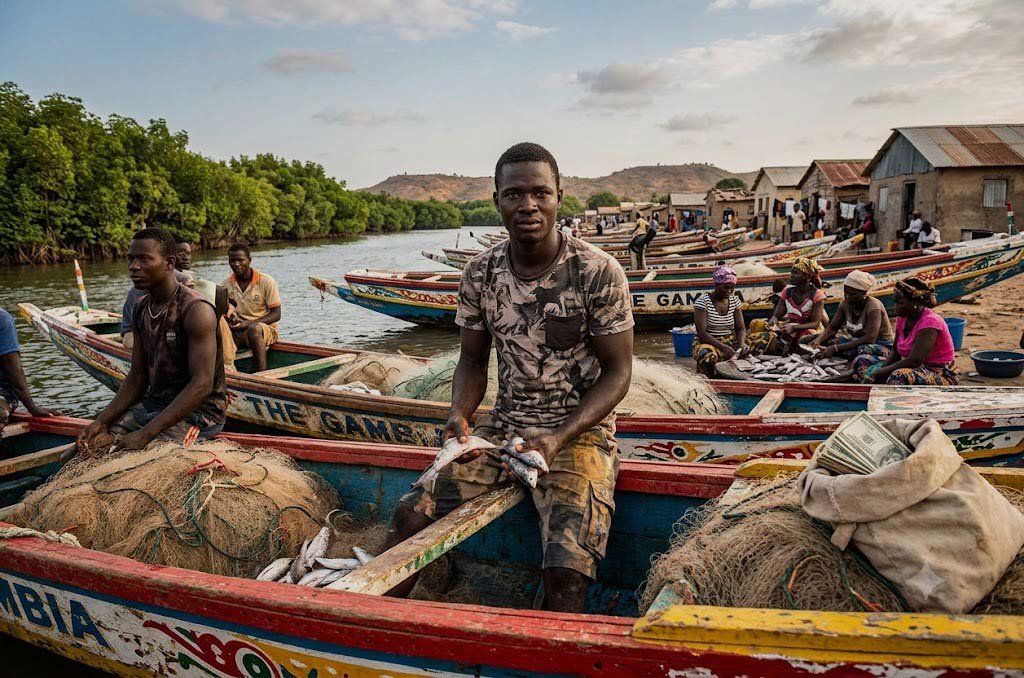
6. The Gambia – $384
The Gambia, the smallest country on mainland Africa, had a GDP per capita of around $384 in 2015 . Its economy relies heavily on fishing, farming, and tourism. However, widespread dependence on traditional farming and fishing methods, which produce low yields, has slowed economic growth and left much of the population living below the international poverty line.
5. Central African Republic – $333
The Central African Republic (CAR), another landlocked nation, recorded a GDP per capita of approximately $333 in 2015 . Despite being rich in minerals like gold, diamonds, and crude oil, the country has been plagued by years of unrest and civil war, which have displaced populations and destroyed infrastructure. The Central African Republic Bush War had a devastating impact, leaving many without adequate shelter .
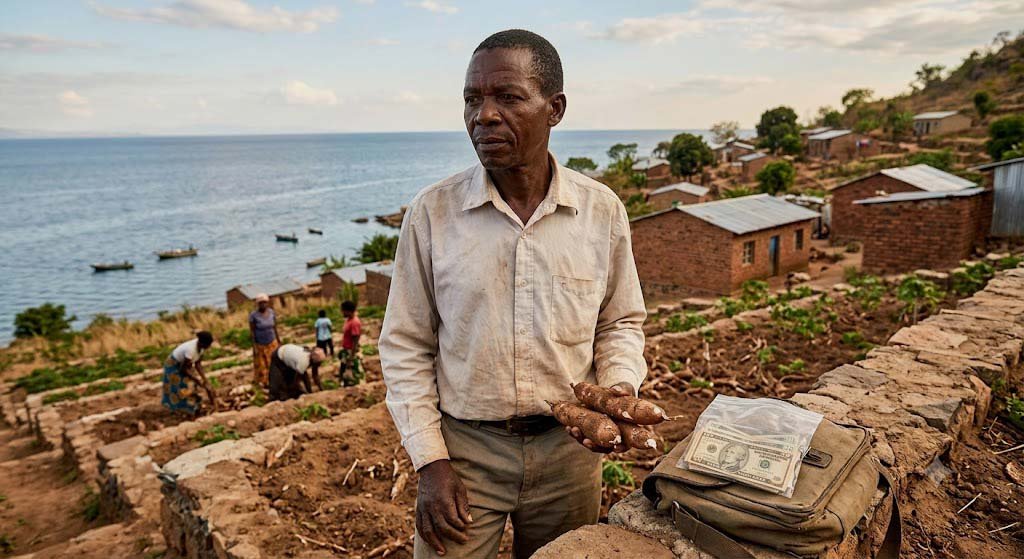
4. Malawi – $352
Malawi, a landlocked country in Southeast Africa, is known as the “Warm Heart of Africa” . However, its citizens face severe economic hardship, with a GDP per capita of roughly $352 in 2015 . With over one-third of its area occupied by Lake Malawi, arable land is limited. Life expectancy remains low, and while some improvements were seen, they were insufficient to lift the country out of poverty .
3. Democratic Republic of Congo – $478
The Democratic Republic of the Congo (DRC) is one of the world’s most paradoxical countries. Despite being the second-largest country in Africa by area and home to vast mineral wealth, it recorded a GDP per capita of approximately $478 in 2015 . The DRC ranks fourth in population in Africa, with over 77 million people, yet political instability, corruption, and misuse of natural resources have kept the vast majority of its citizens living well below the poverty line .
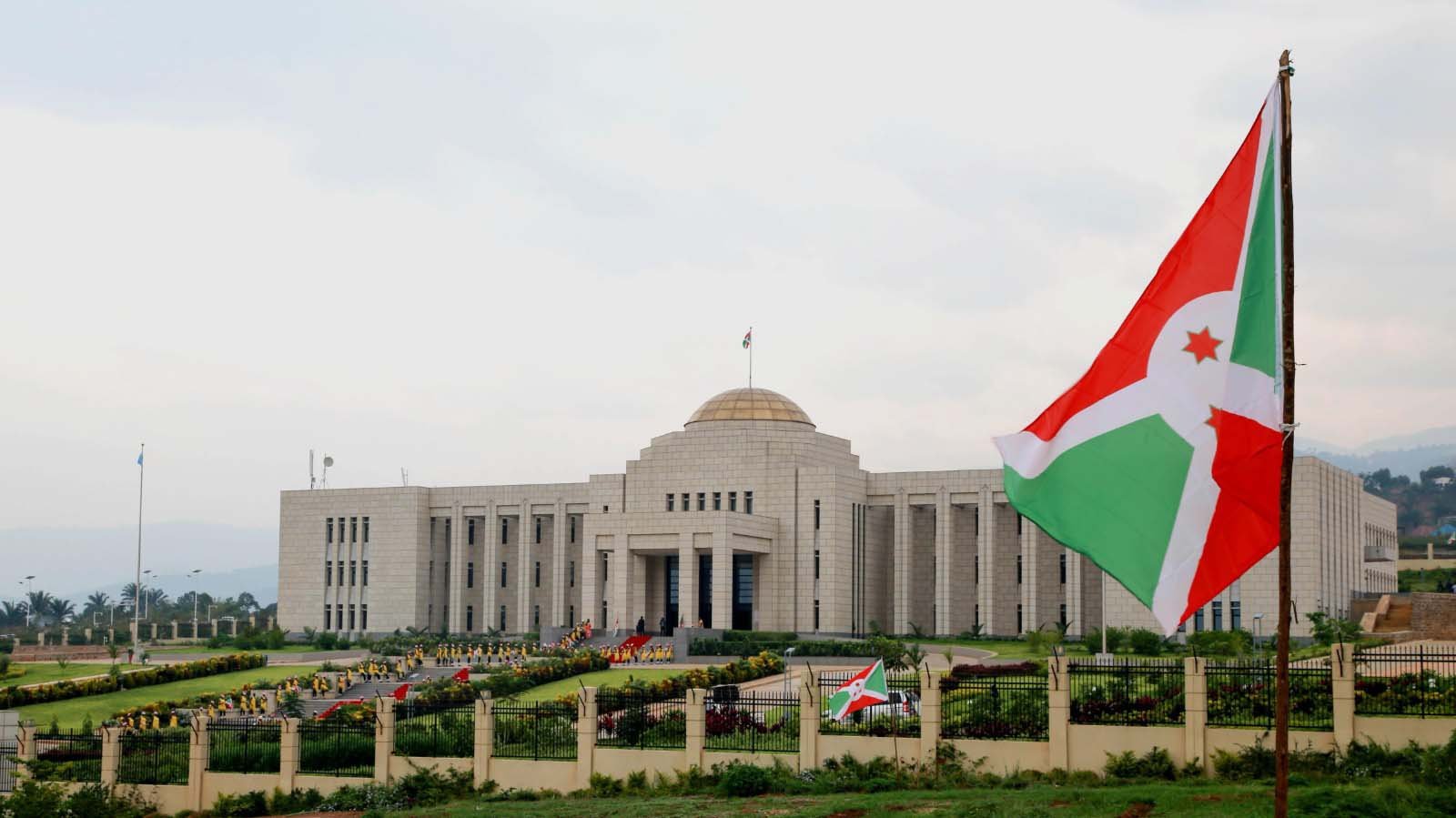
2. Burundi – $267
Burundi, a landlocked country in East Africa, recorded a GDP per capita of approximately $267 in 2015, making it one of the poorest countries in the world . Since gaining independence in 1962, the nation has struggled with weak infrastructure, poor education and healthcare access, and corruption. More than 11 million people have been living significantly below the international poverty level, with hunger being a persistent challenge .
1. Malawi – $226
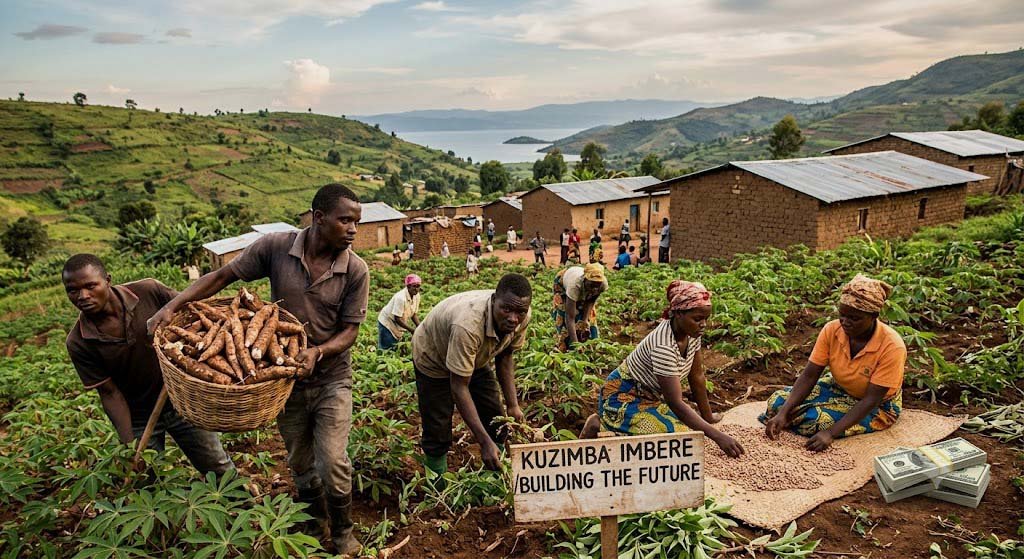
Malawi ranked as Africa’s poorest country in 2015, with a GDP per capita of only **$226**. Despite its reputation for hospitality, the country faces immense challenges. High population density, limited arable land due to Lake Malawi, and low agricultural productivity keep the majority of its 16.7 million citizens in extreme poverty with low life expectancy .
Conclusion: A Persistent Challenge
The story of poverty in Africa is a complex one. The countries featured here are not necessarily poor because they lack resources—in fact, many are rich in minerals and natural wealth. Instead, political instability, ongoing conflicts, weak leadership, and poor economic management have prevented these countries from turning their natural potential into lasting prosperity for their people.
As later analyses confirm, many of these same countries remain entrenched in poverty nearly a decade later, highlighting that economic progress is not inevitable. It requires sound governance, investment in infrastructure, and a commitment to equitable development. The list from 2015 serves as a sobering reminder of the work that remains to be done.
About the Author
My name is Dua Qamar, and I am a content writer with a strong interest in African economic development and the structural challenges facing low-income nations. I believe that understanding the historical and economic context of poverty is the first step toward identifying solutions.
Why I Wrote This Article:
I wrote this piece to provide a data-driven snapshot of the economic challenges facing African nations in 2015. This data offers a valuable historical reference point for understanding how countries have progressed—or remained stagnant—in the years since.
How I Approached This Topic:
My research involved examining data from the International Monetary Fund (IMF), the United Nations Economic Commission for Africa (UNECA), and reports from reputable publications such as Business Insider. I cross-referenced multiple sources to ensure the GDP per capita figures were consistent and reliable . It is important to note that different sources may use slightly different metrics or definitions of GDP per capita, which can result in minor variations in the rankings.
Who This Article Is For:
This article is for anyone curious about African economics, students researching the continent, or readers seeking to understand the persistent economic challenges facing some of the world’s poorest nations.
The Message I Hope Readers Take Away:
The economic history of Africa is one of stark contrast between immense potential and persistent poverty. The 2015 rankings reveal that poverty is often driven by systemic issues—such as governance and conflict—not just a lack of resources. Progress is achievable, but it requires targeted efforts, good governance, and a commitment to lifting entire populations out of hardship.
Written by: Dua Qamar
