


12 Companies That Invest Heavily in Advertising
Introduction
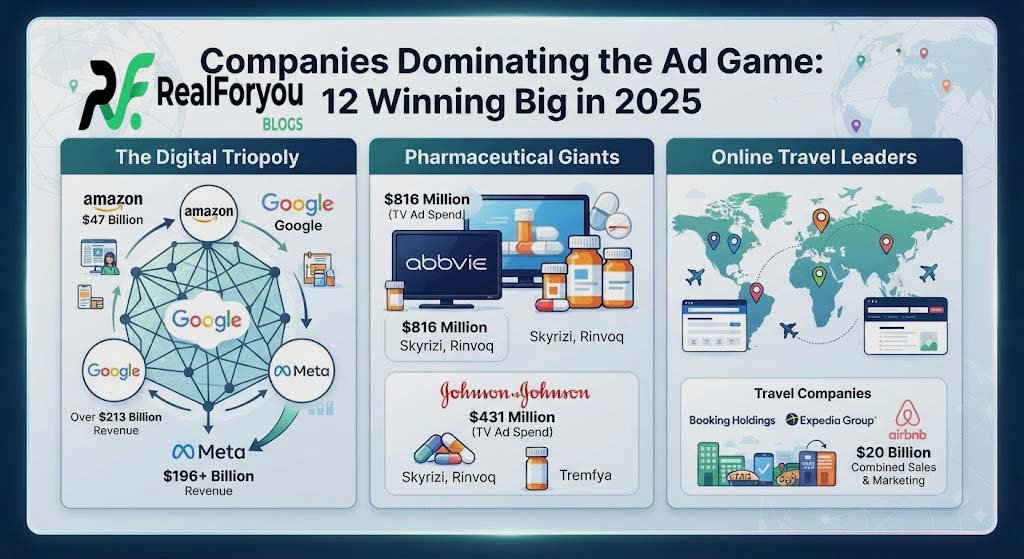
In today’s global business landscape, advertising represents far more than a routine expense—it serves as a powerful growth engine. Examining the advertising landscape of 2025 reveals that the biggest spenders comprise a fascinating mix of technology giants dominating the digital realm and traditional consumer brands fighting to protect their market positions. Understanding who invests the most provides valuable insight into where the battle for consumer attention is truly being waged.
The Dominant Ad Spenders
1. Amazon – $47 Billion
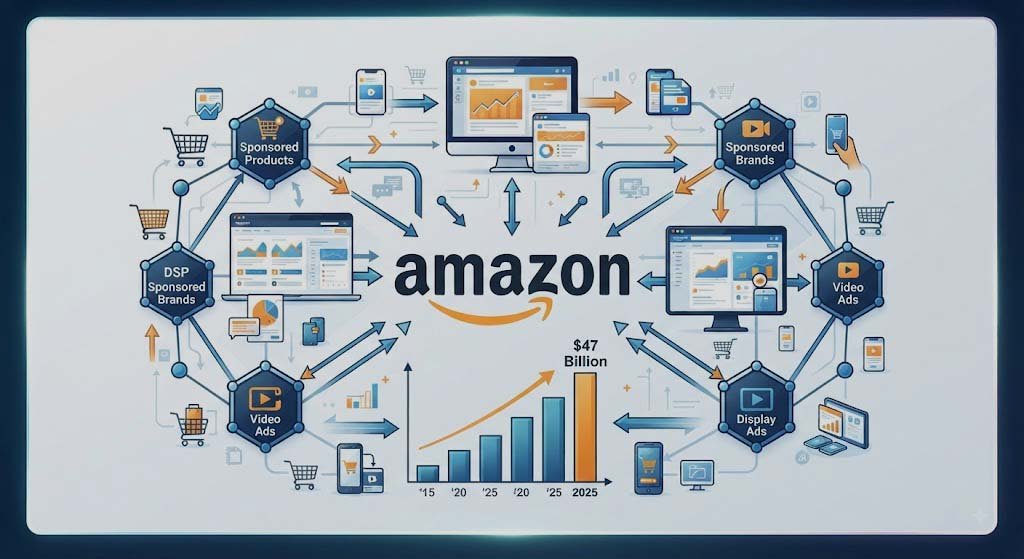
Topping the charts is Amazon, with an extraordinary advertising spend of $47 billion in 2025. This massive investment makes perfect sense when you consider that Amazon functions not merely as a retailer but as a major advertising platform in its own right. Its advertising business has expanded so substantially that it now accounts for over a third of the global retail media market—the fastest-growing segment in advertising. For Amazon, advertising serves a dual purpose: promoting its own products and services while simultaneously selling ad space to countless third-party sellers.
2. Alphabet (Google) – More Than $213 Billion in Revenue
While Alphabet (Google’s parent company) is estimated to generate $213.3 billion in ad revenue—rather than spend it—this figure underscores its dominant position as the world’s largest advertising seller. Google controls an estimated 85.8% of the global search market, making it the primary destination for search advertising budgets. Although its display network has encountered challenges, its search dominance remains largely unchallenged.
3. Meta – $196+ Billion in Revenue
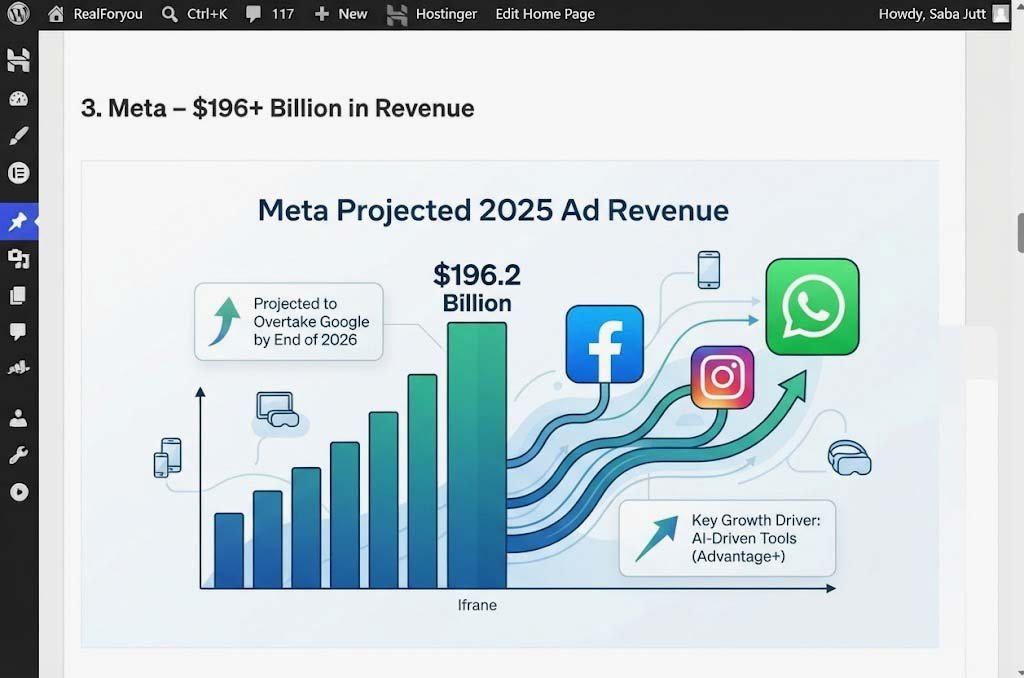
Projections indicate that Meta, owner of Facebook and Instagram, will generate about $196.2 billion in advertising income in 2025. In fact, analysts predict Meta will overtake Google in total ad revenue by the end of 2026. The company’s growth is fueled by AI-driven tools like Advantage+ that enhance ad performance, and its platforms—particularly Instagram and Reels—are attracting an increasing share of advertising dollars. Retail brands are increasingly directing their advertising budgets toward Instagram and TikTok rather than relying as heavily on Facebook.
Other Major Advertisers
4. AbbVie – $816 Million (TV Advertising Alone)
Pharmaceutical giant AbbVie invests enormous sums in advertising, particularly on television. Its immunology drug Skyrizi spent nearly $440 million on TV ads in 2025, while another drug, Rinvoq, invested over $376 million. This investment reflects a broader trend where the pharmaceutical industry’s total ad spending exceeded $20 billion in 2025, representing a 33% increase from the previous year.
5. Johnson & Johnson – $431 Million Invested in Television Advertising
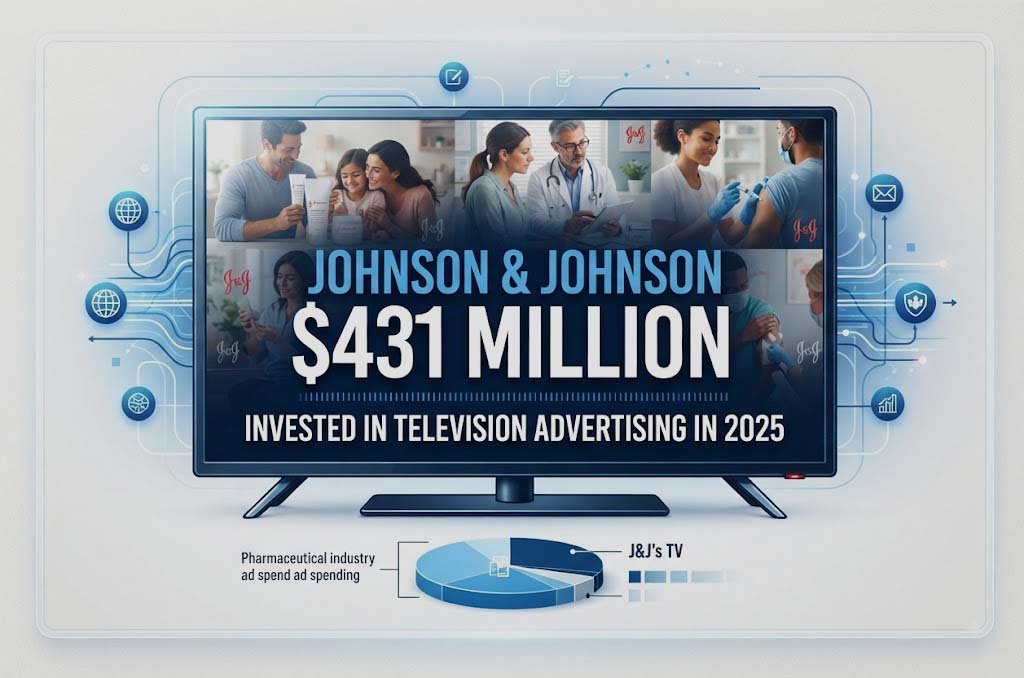
The pharmaceutical sector continues to see Johnson & Johnson as one of its heaviest advertising investors. In 2025, its immunology drug Tremfya accounted for approximately $431 million in television advertising spending. This aggressive investment has made Tremfya the second-largest TV advertiser among drug brands, demonstrating how pharmaceutical companies are competing fiercely for consumer attention in a crowded marketplace.
6. HSBC Group – 19% Increase in Hong Kong
With a 19% annual increase in advertising spend, HSBC Group became Hong Kong’s biggest advertiser in 2025. Other major advertisers in the region included Vital Health, which increased its spending by 4%, Procter & Gamble, which reduced its advertising budget by 18%, and Haleon Group, whose advertising investment in surged by 80%, largely driven by strong promotion of pain-relief products such as Panadol.
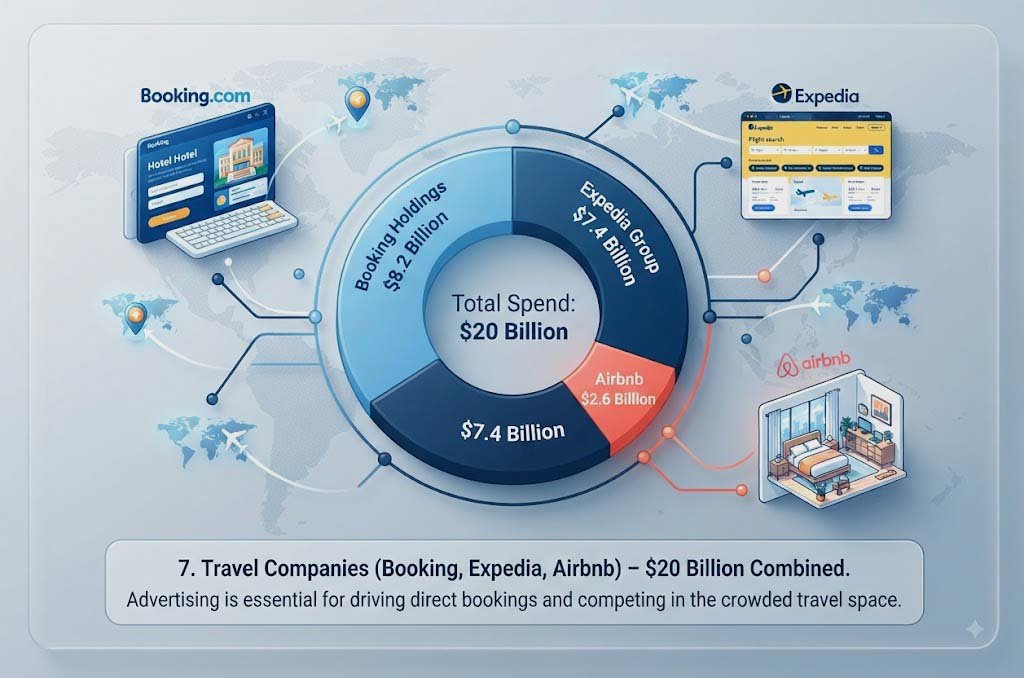
7. Travel Companies (Booking, Expedia, Airbnb) – $20 Billion Combined
Online travel agencies collectively spent over $20 billion on sales and marketing in 2025. The top spenders were Booking Holdings ($8.2 billion), Expedia Group ($7.4 billion), and Airbnb ($2.6 billion). For these companies, advertising is essential for driving direct bookings and competing effectively in the crowded travel space.
The Big Picture: How Dominant Are the Top Spenders?
The advertising world is becoming increasingly concentrated among a handful of dominant players. Together, Alphabet, Amazon, and Meta are projected to capture over 55% of global advertising spend outside China in 2025. Their combined share is expected to exceed 60% by 2030. This “triopoly” has grown as digital advertising has surged, now representing over 80% of total US ad spend.
The top advertisers reflect this transformation. While Amazon spends $47 billion to promote its ecosystem, Google and Meta operate primarily as advertising platforms that others utilize. The next tier is dominated by pharmaceutical companies (in TV advertising) and travel companies (in digital), both investing billions to reach consumers in highly competitive markets.
About the Author
My name is Dua Qamar, and I’m a content writer focused on business, technology, and market trends. I am particularly interested in how companies allocate their resources to strengthen their brands and attract consumers.
Why I Wrote This Article:
I wrote this piece because the advertising spending landscape reveals a great deal about how the modern economy functions. The companies investing the most money are betting on consumer attention as their primary growth engine, and understanding that bet helps us comprehend the strategies of the world’s most powerful corporations.
How I Approached This Topic:
I conducted my research by compiling and reconciling information from numerous industry publications, covering advertising outlays, fiscal estimates, and sector-specific assessments, in order to isolate the companies with the most substantial advertising investments.
Who This Article Is For:
This article appeals to business analysts, marketers, and curious readers who want to understand the economic forces that drive advertising spending.
The Message I Hope Readers Take Away:
The advertising industry is increasingly dominated by a few technology giants, while traditional heavy spenders like pharmaceutical companies continue to invest massive sums to reach consumers. Understanding where the money flows helps us see where the battle for consumer attention is truly being fought.
Written by: Dua Qamar
