


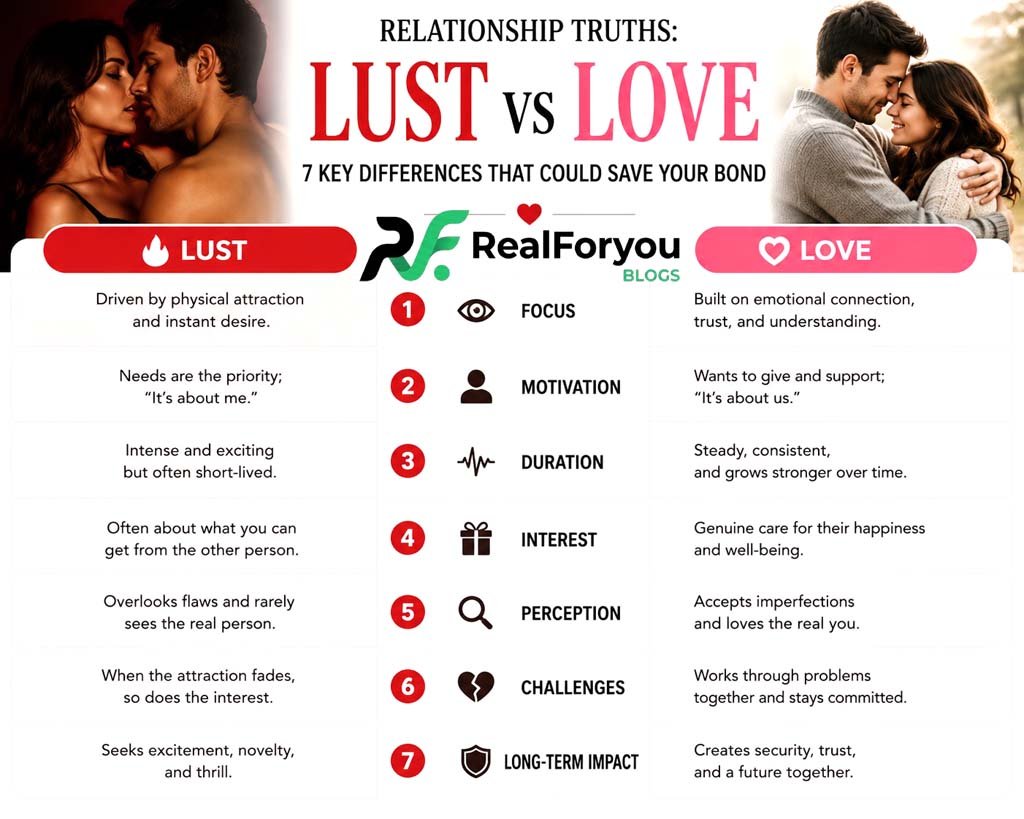
Lust vs Love: Understanding the Key Differences That Could Save Your Relationship
Introduction
Have you ever felt an overwhelming pull toward someone—your heart races, your palms sweat, and you can barely think straight—only to wonder weeks later if it was actually love or just a powerful physical attraction? You are not alone. This uncertainty is a challenge that many couples experience at some point.
The distinction between lust and love matters more than most people realize. Misinterpreting intense physical desire for deep emotional connection can lead to heartbreak, wasted time, and relationships that crumble when the initial spark fades. Understanding the difference can help you make better decisions about who to invest your time and heart in.

What Is Lust?
Lust is an intense sexual attraction to another person that is largely driven by biology. According to biological anthropologist Dr. Helen Fisher, lust is one of three distinct brain systems for love, powered primarily by testosterone and estrogen . It activates the hypothalamus and amygdala—parts of the brain linked to reward, motivation, and primal urges .
Lust centers on intense physical desire and the pursuit of instant pleasure. It’s the intense feeling of attraction that can arise when someone catches your eye. This powerful feeling can be intoxicating and often makes people ignore obvious incompatibilities .
However, lust alone has a clear focus. As one relationship expert explains, “Lust is about the self, about ‘me.’ What can I have? I must have you! Thinking that everything will improve afterward.” It is rooted in personal gratification rather than mutual growth.

What Is Love?
Love, unlike lust, develops over time. It involves a deep emotional attachment built on trust, care, and shared values . It grows through vulnerability and commitment . Love requires that you invest in understanding the other person’s past, present, and future. You see their strengths and weaknesses clearly yet remain committed to them.
Love also changes how the brain functions. According to Dr. Fisher’s findings suggest that forming close emotional bonds activates reward pathways in the brain, with dopamine and oxytocin encouraging feelings of connection and trust. Love is not just a feeling—it is an investment in another person’s well-being.

1. Lust is Surface-Level; Love is Deep
Lust tends to focus on physical appearance and sexual chemistry. You might be drawn to someone’s body, charm, or charisma without caring much about their personality or values. Love, on the other hand, drives you to know someone thoroughly. You become interested in their stories, fears, hopes, and dreams .
2. Lust is Conditional; Love is Accepting
People experiencing lust often lose interest when they discover a partner’s imperfections .True love means accepting someone for both their good qualities and their flaws. It is not about finding someone perfect but choosing to embrace someone fully .

3. Lust Avoids Difficult Conversations; Love Embraces Them
Lust keeps relationships at an idealized level to preserve the fantasy. True love grows through open communication, overcoming difficult emotions, and working together to settle conflicts. If you find yourself avoiding serious topics to maintain the “spark,” you are likely dealing with lust, not love.
4. Lust Feels Like Chaos; Love Feels Like Peace
Lust can feel like addiction. It consumes your thoughts and can lead to impulsive, desperate behavior . Love, in contrast, tends to feel steady and secure . As relationship expert DeVon Franklin notes, peace is the strongest indicator of whether a relationship is healthy and based on love rather than selfish desire . If a relationship consistently disrupts your peace, it may be driven by lust.

5. Lust is About the Body; Love is About the Whole Person
When you are in lust, you might feel intensely physically drawn to someone but have little interest in meaningful conversation. When you are in love, you want to spend quality time together beyond the bedroom. Hours seem to fly by when you’re talking because the conversation feels so engaging .
Why Confusing the Two Can Be Dangerous
The consequences of mistaking lust for love can be serious. People may rush into commitments before truly knowing their partner, set aside important values for short-term gratification, become emotionally dependent on an unreliable partner, or waste years in relationships with no foundation.
One relationship therapist points out that modern culture tends to celebrate passion as the foundation of lasting relationships. This valuing of hot lust over warm and comfortable love can foster the idea of other fish in the sea. Instead of investing time and energy to bring a relationship to life, you begin to doubt whether your significant other is the right one” .

Can Lust Turn Into Love?
Yes. Many lasting relationships begin with powerful physical attraction and develop into genuine love . However, lust alone rarely sustains a relationship. For lust to transform into love, both partners must invest in getting to know each other emotionally and mentally . They must build trust, share values, and commit to mutual growth.
Signs You’re in Love
If you are still unsure, here are some clear signs that your feelings may be love rather than lust :
You care about their well-being, not just how they make you feel.
You are curious about their story, past, present, and future.
Emotional safety with them comes naturally.
You imagine a shared future, not just shared nights.
You feel more like yourself around them, not like you are performing.
You are willing to support them and grow together.

How to Know for Sure
If you are asking whether your feelings are lust or love, you might be asking how much you should invest in a relationship . Instead of trying to define the relationship and place it in a box, check in with yourself :
Do you trust them?
Do you feel comfortable showing your real personality around them?
How aligned are your values and dreams for the future?
Love may begin with a spark, but it is sustained through daily choices, consistent effort, and genuine connection. Lust may bring you together; only love will keep you there.
About the Author
My name is Dua Qamar, and I am a content writer passionate about exploring relationships and human connection.
Why I Wrote This Article
I wrote this piece because I have seen too many people—including friends and family—misinterpret intense attraction for love and end up hurt. The confusion between lust and love is one of the most common yet least discussed challenges in modern dating. I wrote this to offer useful guidance so readers can learn from these experiences instead of repeating them.
How I Approached This Topic
My research involved studying insights from psychologists, relationship experts, and neuroscientists to present a balanced, evidence-based perspective. I consulted experts like Dr. Helen Fisher and relationship therapists who have studied these differences extensively .
Who This Article Is For
This article is for anyone who has ever wondered whether their feelings are genuine love or simply physical attraction. It is intended for people beginning a new relationship and trying to understand their emotions, as well as those looking back on past experiences in search of greater clarity and understanding.
The Message I Hope Readers Take Away
Understanding the difference between lust and love is not about labeling your feelings—it is about making intentional, informed decisions. True love grows from daily commitment rather than relying only on passing feelings.
Written by: Dua Qamar

1 Comment
Pingback: 5 Funniest Raccoon Voice Over Videos That Will Brighten Your Day Instantly - RealForyou