


10 Facts You Didn’t Know About Starbucks
Starbucks is everywhere. With over 40,000 stores worldwide and roughly 8 million coffees sold daily, it has become the undisputed king of the global coffeehouse industry . But behind the iconic green siren and the customised orders lies a fascinating story of literary inspiration, unexpected beginnings, and a relentless drive to reshape how the world drinks coffee.
Here are ten facts you might not know about one of the world’s most recognisable brands.
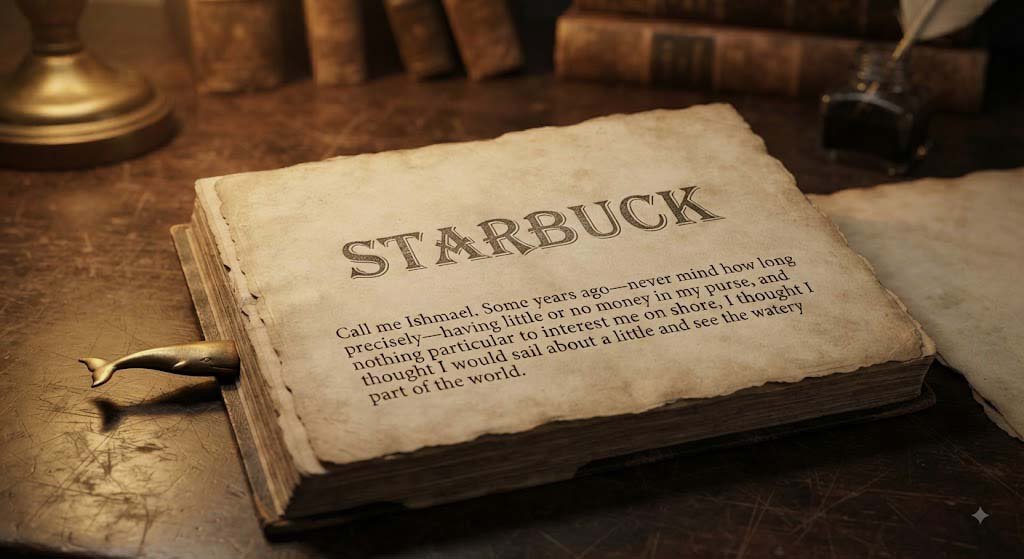
1. The Name Came from Moby Dick
Before Starbucks became known for its cups, loyalty cards, and drive-thru locations, its founders first had to choose a name for the company. Jerry Baldwin, Gordon Bowker, and Zev Siegl, three friends with a passion for fine coffee, wanted something that evoked the romance of the high seas and the seafaring tradition of early coffee traders .
They found it in Herman Melville’s classic novel Moby Dick, naming their company after the first mate, Starbuck . Unlike the stoic first mate, the brand chose the plural name “Starbucks,” giving it a more commercial and memorable feel.
2. Its Logo Features a Mystical Siren, Not a Mermaid
The original brown and white logo wasn’t just a generic sea creature. It was inspired by an old maritime engraving of a two-tailed siren—a figure from Greek mythology that lured sailors to their doom with song . The founders wanted to connect the brand to the nautical history of their home city, Seattle, a major port.
The siren has undergone several transformations. She became more simplified, her belly button disappeared, and she was cropped closer to her face to create a more modern and approachable mascot. The original 1971 version, however, is still a point of pride, and you can see it displayed at the original Pike Place Market store .
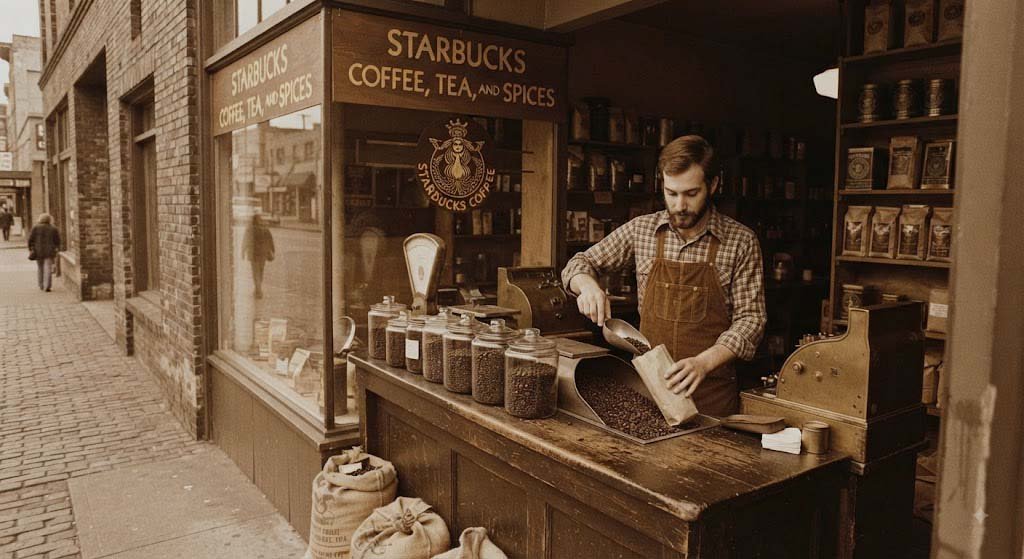
3. The First Store Was Small and Operated by Just One Employee
Today’s massive Starbucks stores are a far cry from the brand’s humble beginnings. The very first Starbucks, which opened in 1971, was a small shop front at 2000 Western Avenue in Seattle (the Pike Place store we know today opened a few years later) .
When it opened, it was so small that co-founder Zev Siegl was the only paid employee . He scooped beans for customers, while the other two founders kept their day jobs . The store didn’t even sell hot drinks; it was primarily a roaster and retailer of whole-bean coffee .
4. Starbucks Originally Used Brown Instead of Green
While the brand is now inseparable from its earthy green palette, the very first store featured a warm colour scheme of yellow and brown . The iconic green apron didn’t appear until 1987, after Howard Schultz had taken over the company and begun his expansion. Before that, the logo and decor were a deep brown, reflecting the colour of the coffee itself.
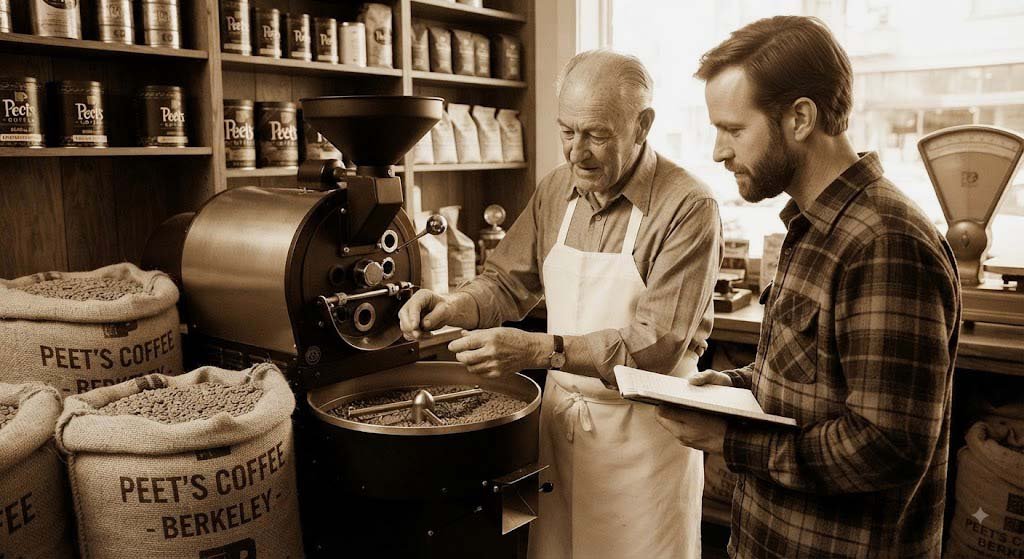
5. Peet’s Coffee Was Their Early Mentor
Alfred Peet, the founder of Peet’s Coffee, was a major inspiration to the Starbucks founders . In fact, for the first few years of business, Starbucks didn’t even roast its own beans. Peet’s Coffee was responsible for roasting their coffee, supplying them with high-quality beans until 1973, when the partners purchased a used roaster and began experimenting with their own blends .
6. The “Third Place” Philosophy Was an Italian Import
Howard Schultz joined Starbucks in 1982 and quickly transformed the company. He was inspired by Italy’s coffeehouse culture, where cafés served as community gathering places—a welcoming “third place” between home and work.
Schultz envisioned bringing that sense of connection and community to the United States. He temporarily left Starbucks to start his own coffeehouse chain, Il Giornale, before returning to purchase the company in 1987 . He then merged his vision with the Starbucks name, creating the café experience that we know today.
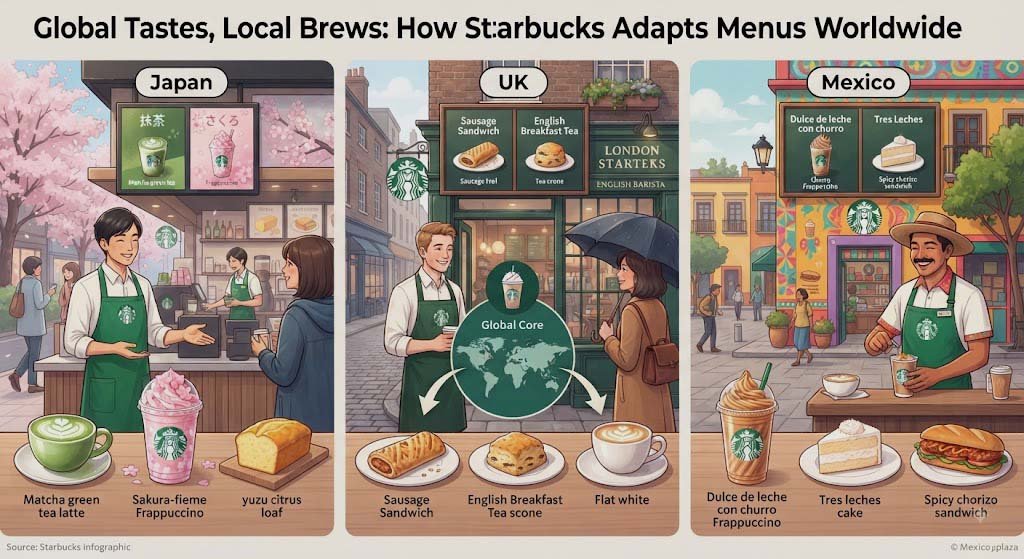
7. They Customise Menus for Local Markets
Starbucks’ global expansion has been remarkably successful because they understand the importance of localisation. While the Frappuccino is available everywhere, the menu adapts to regional tastes. In Japan, you can find extensive matcha options and seasonal Sakura (cherry blossom) drinks . In the UK, they offer local breakfast items like the sausage sandwich and, of course, English Breakfast tea .
8. Their Global Growth Has Been Phenomenal
The company’s growth is staggering. It opened its first store in Japan in 1996 in the Ginza district of Tokyo and, by 2002, had already opened its 400th store in Okinawa . As of 2025, the number of Starbucks stores has exceeded 40,000, with international locations now outnumbering those in North America .
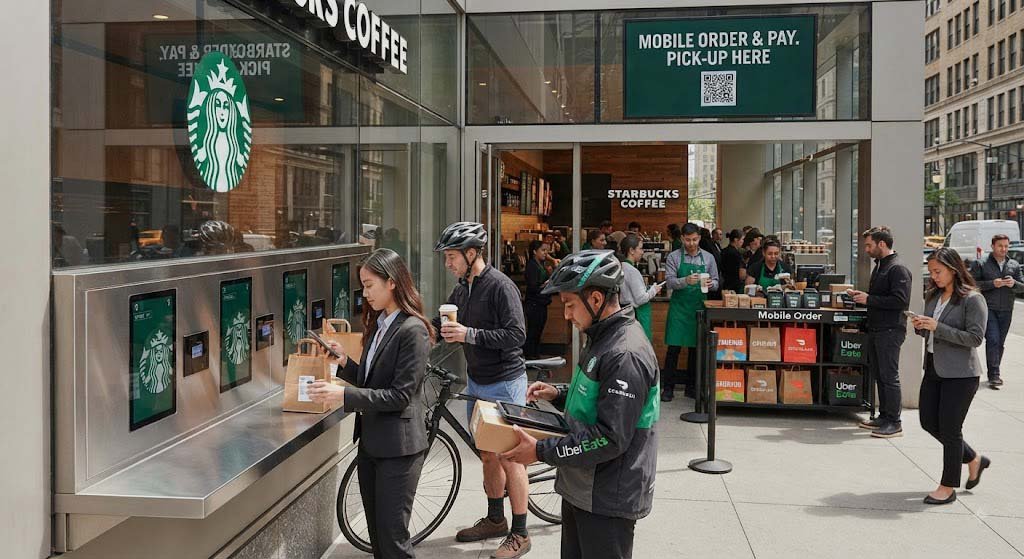
9. They Have a Massive Online Ordering Presence
Starbucks has aggressively embraced digital ordering. The company cultivates a robust online ordering and delivery system, partnering with major platforms like Grubhub, Uber Eats, and DoorDash . Their proprietary app, which allows customers to pre-order and pay for items before pick-up, has been a key driver of sales .
10. The Company Has a $40 Billion Brand Value
Starbucks is not just a coffee chain; it is a financial powerhouse. In 2025, its revenue peaked at over $37 billion** . With a brand value of almost **$39 billion, it ranks as the second most valuable restaurant company in the world, just behind McDonald’s .
Conclusion
From a single storefront run by one man to a global empire with thousands of stores and a brand value in the billions, Starbucks’ story is one of vision, adaptation, and a relentless focus on the customer experience. Its success is a testament to the power of the “third place” concept, the importance of localisation, and the enduring appeal of a well-made cup of coffee.
About the Author
My name is Dua Qamar, and I am a content writer passionate about exploring the stories behind the world’s most iconic brands. I believe that the best corporate histories are filled with surprising details that reveal as much about the culture of the company as they do about the product.
Why I Wrote This Article:
I wrote this piece because Starbucks is more than just a place to get a coffee; it’s a cultural phenomenon. I wanted to move beyond the menu and explore the fascinating, and often overlooked, facts that have shaped its journey.
How I Approached This Topic:
My research drew on a range of sources, from the company’s own official history to credible financial data and industry analysis. I cross-referenced information from the company’s official website , financial data from Statista and Britannica , and industry insights from sources like The Takeout and Tasting Table .
Who This Article Is For:
This article is for anyone who has ever held a Starbucks cup and wondered about the story behind the siren. It’s for the casual coffee drinker, the devoted fan, and anyone who enjoys learning the hidden histories of the products they consume.
The Message I Hope Readers Take Away:
The next time you order a latte, take a moment to appreciate the extraordinary journey that brought it to you. It’s a story of literary inspiration, a single siren, and a dream to create the “third place” for millions of people around the globe. The company’s ability to adapt its menu for local markets and embrace digital innovation shows that its success is built on a foundation of constant evolution.
Written by: Dua Qamar
